
Catalogue
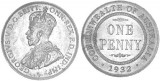
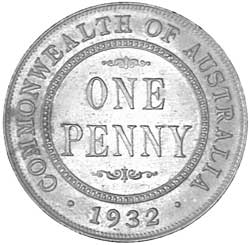
George V, 1932 and 1933, both London die. Brown and red nearly uncirculated. (2)
Estimate $150
SOLD $420
George V, 1933/2 overdate(2); also halfpennies 1930, 1931. Glossy brown good very fine - extremely fine the overdates rare in this condition.
Estimate $150
SOLD $120
George V, 1934 and 1936, both London die. Nearly uncirculated. (2)
Estimate $100
SOLD $100
George VI, 1938, 1939 and 1948. Nearly uncirculated - uncirculated. (3)
Estimate $50
SOLD $90
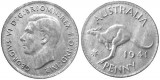
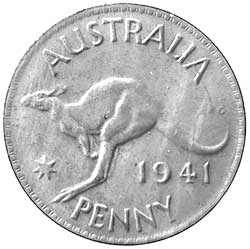
George VI, 1941 K dot G. Red and streaky brown uncirculated.
Estimate $200
SOLD $180
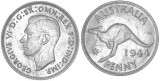
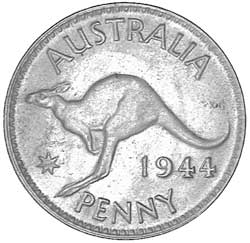
George VI, 1944. Uncirculated.
Estimate $300
SOLD $520
George VI, 1944 and 1945 Y. Nearly uncirculated. (2)
Estimate $80
SOLD $180
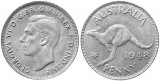
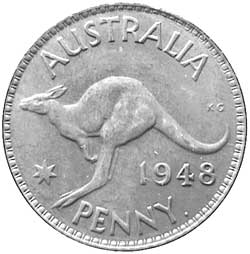
George VI, 1948Y (Perth). Well struck for this, light red brown uncirculated and rare in this condition.
Estimate $500
SOLD $1,250
George VI - Elizabeth II, 1948-50, 1951PL, 1953A.(2), 1956 and 1959Y. Mostly full red uncirculated. (8)
Estimate $120
SOLD $500
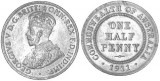
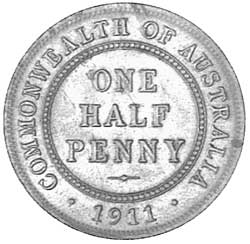
George V, 1911. Mostly mint red, uncirculated.
Estimate $120
SOLD $300
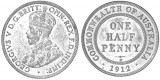
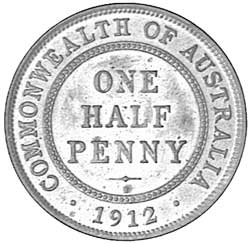
George V, 1912H. Full original brilliant mint red, choice uncirculated.
Estimate $750
SOLD $840
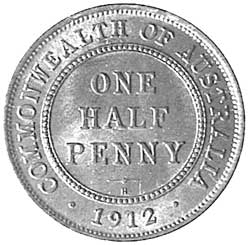
George V, 1912H. Mostly full mint red, uncirculated.
Estimate $550
SOLD $500
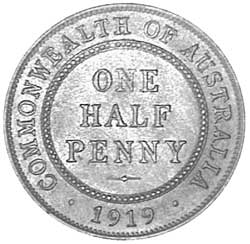
George V, 1919. Nearly full mint red, uncirculated.
Estimate $200
SOLD $240
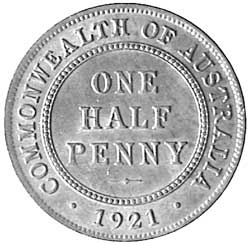
George V, 1921. Mostly mint red, uncirculated.
Estimate $150
SOLD $200
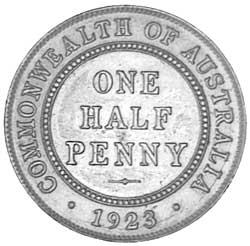
George V, 1923. Full glossy brown, diagnostic die-break extensive on both sides, good extremely fine and very rare in this condition, possibly the fifth finest currency issue known.
Estimate $15,000
SOLD $25,000
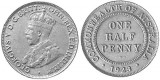
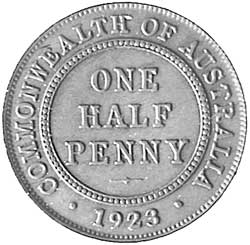
George V, 1923, eight pearls. Even brown patina, die breaks on obverse and reverse, nearly extremely fine.
Estimate $3,000
SOLD $9,400
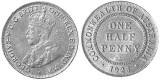
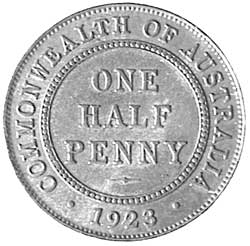
George V, 1923. Diagnostic die breaks both sides, eight pearls, high rims with slight nicks, old obverse scratch at 9 o'clock otherwise nearly extremely fine and rare in this state.
Estimate $3,000
SOLD $4,600
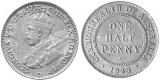
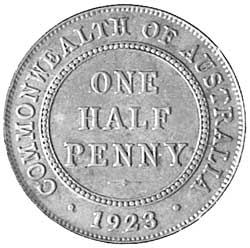
George V, 1923. Diagnostic break both sides, most of centre diamond clear and last two pearls fused together, good very fine.
Estimate $2,500
SOLD $5,600
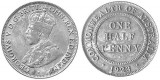
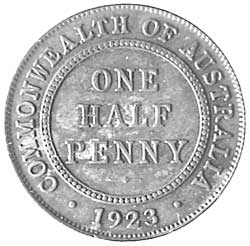
George V, 1923. Six pearls and centre diamond, very fine and rare in this condition.
Estimate $2,500
SOLD $2,600
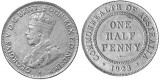
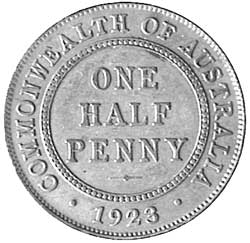
George V, 1923, six pearls. Scratches on obverse, otherwise very fine.
Estimate $1,500
SOLD $5,800
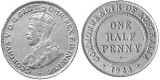
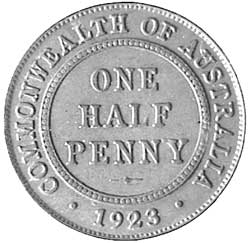
George V, 1923, six pearls. Nearly very fine.
Estimate $1,500
SOLD $2,500
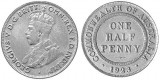
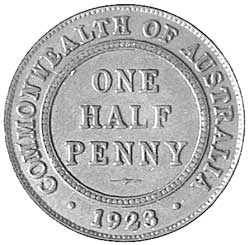
George V, 1923. Good fine/ very fine.
Estimate $1,500
SOLD $1,800
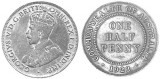
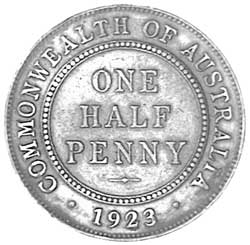
George V, 1923. Cleaned otherwise fine/very fine.
Estimate $1,200
SOLD $1,350
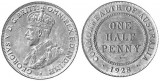
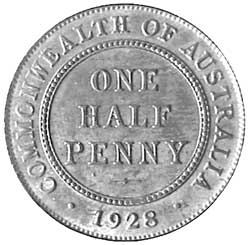
George V, 1928. Red and brown, uncirculated and rare in this condition, one of the finest known.
Estimate $750
SOLD $550
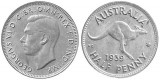
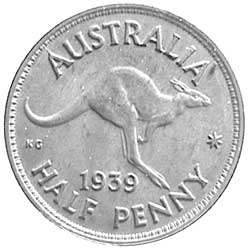
George VI, 1939, kangaroo reverse. Brown and red, nearly uncirculated.
Estimate $240
SOLD $320
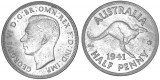
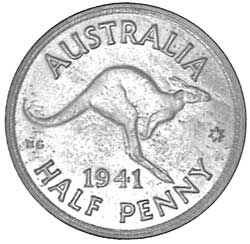
George VI, 1941. Full mint red, brilliant uncirculated.
Estimate $100
SOLD $240
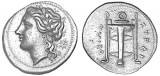
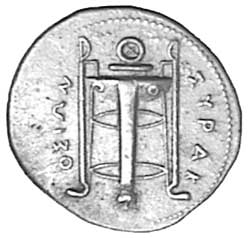
Sicily, Syracuse, Time of Agathokles, (317-289 B.C.), electrum twenty five (25) litrai, (3.786 grams), obv. laureate head of Apollo head with long flowing hair, star behind, dotted border, rev. **SURAK SION* around, tripod lebes with legs ending in lion's feet, dotted border, (S.957, Jenkins 'Electrum Coinage of Syracuse' Essays Robinson, p.157 (Pl.14, obv. die 7, probably rev. die 10, same dies), BMC 258 (same obverse die), Pozzi 632 (same obverse die), Naville Sale X, 316 (same obverse die). Full flan, extremely fine and rare. $$ An important issue struck during the Carthaginian War c. 310-306 B.C. Jenkins notes that only one obverse die was used for this symbol and at least five reverse dies these with some muling with other obverse dies utilising other symbols. Reverse 10 cannot be checked, it is only known from the Naples piece and is probably the same reverse die on this coin above. The financing of Agathokles' war with the Carthaginians was provided by a series of three electrum denominations, 50, 25 and 10 litrai. Only the 25 litrai was produced in enough quantity to actually play a significant role in the war's financial operations. The gold content of the 25 litrai varies from 70% for the first issue to 30% for the later issues. This probably reflects a lack of booty from the campaign needed to provide the necessary bullion to finance the expedition. The choice of Apollo/tripod type proclaims Agathokles' devotion to his patron god.
Estimate $3,500
SOLD $0
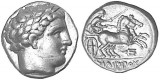
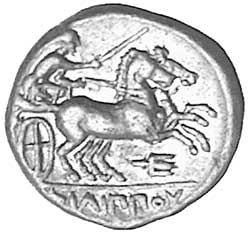
Macedon, Kingdom of Philip II, (359-336 B.C.), gold stater, (8.580 grams), Amphipolis mint, issued c.340-328 B.C., obv. head of Apollo to right with laureate wreath, rev. galloping biga driven by charioteer holding kentron in right hand, reins in left hand, trident below horses, in exergue **FILIPPOU*, (cf.S.6663, Le Rider Group II, SNG Cop.524). Traces of mint bloom, of fine style, good very fine/nearly extremely fine.
Estimate $3,000
SOLD $2,000
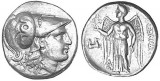
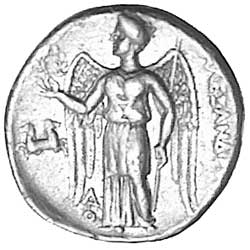
Macedon, Kingdom of, Alexander III, (336-323 B.C.), gold stater, (8.496 grams), Lampsaxus mint, issued 328-323 B.C., obv. head of Athena to right in crested Corinthian helmet, ornamented with serpent, rev. Nike standing to left, holding wreath in outstretched hand, two conjoined foreparts of horses, below **D/O* monogram, to right **[A]LEXANDP[OU]*, (cf.S.6702; Price 1358, SNG Cop.630, M.394, BMC 1358a-e). Good very fine.
Estimate $2,700
SOLD $0
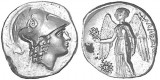
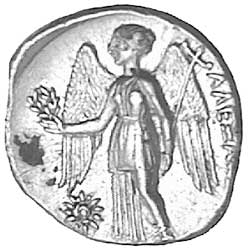
Macedon, Kingdom of, Alexander III, (336-323 B.C.), gold stater, (8.576 grams), Sardes mint, issued 319-315 B.C., obv. head of Athena to right in crested Corinthian helmet, ornamented with serpent, rev. Nike standing to left, holding wreath in outstretched hand, star in lower left field, to right **ALEXAN[DPOU]*, (cf.S.6702; Price 2669, M.151, BMC 2669a). Severe edge scrape, otherwise extremely fine and rare.
Estimate $1,800
SOLD $0