
Lot 2909
Sale 123 · Important Australian, British, World, and Ancient Coins, Banknotes, and Medals
Images
Description
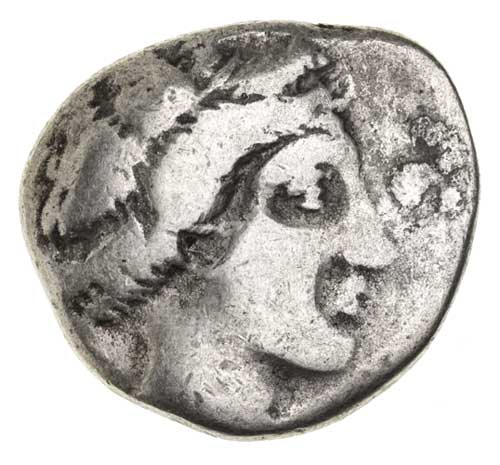
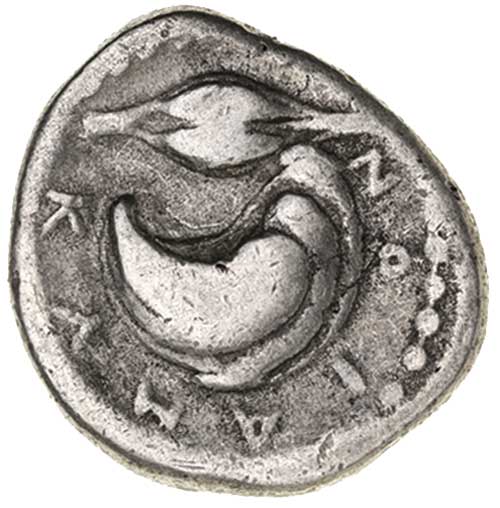
Italy, Campania, Cumae, (c.420-380 B.C.), silver nomos, stater or didrachm, (6.92 g), obv. head of female (nymph) to right, with distinctive die crack before forehead, rev. mussel hinge to left, corn-grain above, **KUMAION* around, (cf.S.290, Rutter Group 16, No.158 [obv. die 120, rev. die 145], BMC 30 [same dies], SNG ANS 243 [same dies]). Fine/good fine and very scarce.
Ex George Mihailuk Collection, from M.R.Roberts, August 2007.
Most examples from this mint of this period are worn coins. Rutter records ten examples only from this die combination. Cumae (modern Cuma) was the first Greek colony on the mainland of Italy (Magna Graecia) according to Strabo, It is an ancient city located (19 km) west of Naples. Cumae founded a number of colonies and grew to be an important regional power. It repulsed Etruscan and Umbrian attacks, but fell in the late 5th cent. BC to the Samnites. Cumae supported Rome in the second century BC and adopted Roman culture which lead ultimately to its inhabitants becoming Roman citizens.
- Estimate
- $200
- Result Status
- Sold
- Prices Realised
- $300