
Lot 1771
Sale 86 · Important Australian, World & Ancient Coins, Medals & Banknotes
Images
Description
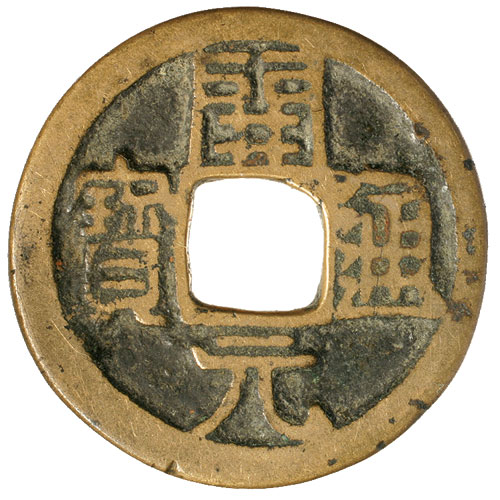
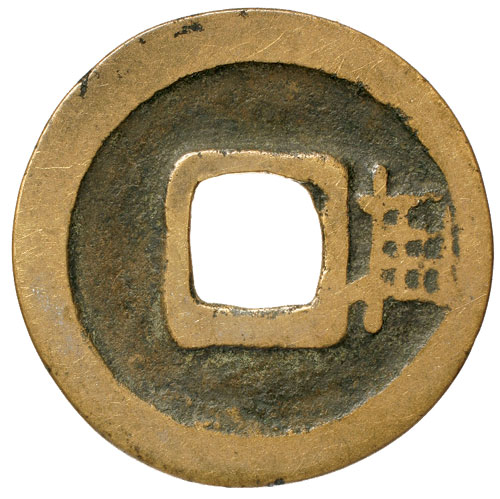
China, The Tang Dynasty, Kingdom of Wu, round cash with square hole, (A.D. 618-907), value one cash, obv."Kai Yuan tong bao" (The Inaugural Currency), four characters around, diameter 24-26 mm, late type issues of 845-846, all with characters on the reverse s the names of various mints and sometimes with additional dots as well (cf. Hartill 14.50-14.97, Sch. 366 (2), 367, 368, 369, 370 (2), 373, 374, 375, 376, 377, 383 (2), 384 (2), 385 variant, 388, 390, 393 (2), 398 (illust.), 400, 402, cf.FTP 708-742). A wide range of mints and types, several as varieties, fair - good very fine, many scarce. (24)
In 845 the Emperor Wu Zong, a Taoism follower destroyed the Buddhist monasteries and used the copper bells, gongs, burners and statues to cast coins in various localities. These local mints were under the control of the provincial governors. One governor Li Shen of Huainan province requested that he might cast coins bearing the name of the prefecture and this was allowed. Generally these coins with mint names on the reverses, known as Huichang Kai Yuans are of poor workmanship and size compared to the earlier Kai Yuan issues. The policy was changed the following year when Xuanzong became emperor and these provincial minted and named coins were recast to make Buddhist statues. Consequently these mint named issues are much scarcer than the unnamed Kai Yuan issues.
- Estimate
- $250
- Result Status
- Sold
- Prices Realised
- $200