
Lot 3438
Sale 79 · Important Australian & World Coins, Tokens, Medals & Banknotes
Images
Description
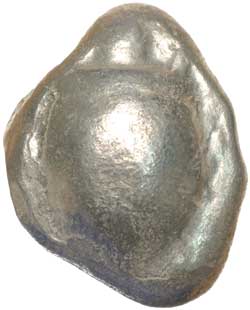
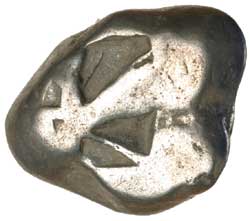
Attica, Aegina, (510-500 B.C.), silver stater, (11.414 grams), obv. smoothed shell sea turtle without row of dots down dorsal spine, rev. 'Union Jack pattern', (S.1849 [£350], Asyut Group IIb 'probably a thick collar type', cf.432-437, SNG Delepierre 1559). Fine - very fine, worn obverse die.
Ex Noble Numismatics Sale 61 (lot 2622). The Asyut hoard suggests the chronology to be 510-485 B.C. This and the next two lots are a group showing the change in reverse punches in the early 5th century at Aegina. Much has been written on this early coinage since Samuel Millbank wrote his book on 'The Coinage of Aegina' in 1924. Since then important publications have attemped to establish the order of issue and the chronolgy of the series, (generally around the description of a relevant hoard). They include W.L. Brown 'Pheidons Alleged Aeginetan Coinage' (NC 1950, pp.177-204); R. Ross Holloway, 'An Archaic Hoard From Crete and the Early Aeginetan Coinage' in ANS Museum Notes 17 (1971, pp.1-21, as based on his doctoral dissertation [The Elder Turtles of Aegina, 1960, Princeton University]); Price and Waggoner, 'Archaic Greek Silver Coinage, The 'Asyut' Hoard', pp.69-76; Carmen Arnold-Biucchi et al., 'A Greek Archaic Silver Hoard from Selinus' ANS Museum Notes pp.14-22. The chronology is still under review and new hoards, when published, bring us closer to the truth. Eg. Colin Kraay in ACGC (p.43-4) places the small skew reverse coinage (Asyut Group VII) to around 500 B.C. in contrast to our dating of 490-475 B.C. The reference to SNG Delepierre is relevant as that publication illustrates 298 staters from Aegina, known as the Megalopolis Hoard 1966 and now in the Paris cabinet. It was buried about 431 B.C.
- Estimate
- $250
- Result Status
- Sold
- Prices Realised
- $150