
Lot 280
Sale 143 · Upcoming Sale 143 Important Coins, Medals & Banknotes
Images
Description
Traditional Exchange Valuables and Ethnographic Implements, Collection of six traditional exchange valuables, ceremonial objects and implements from Africa and the Pacific, comprising:
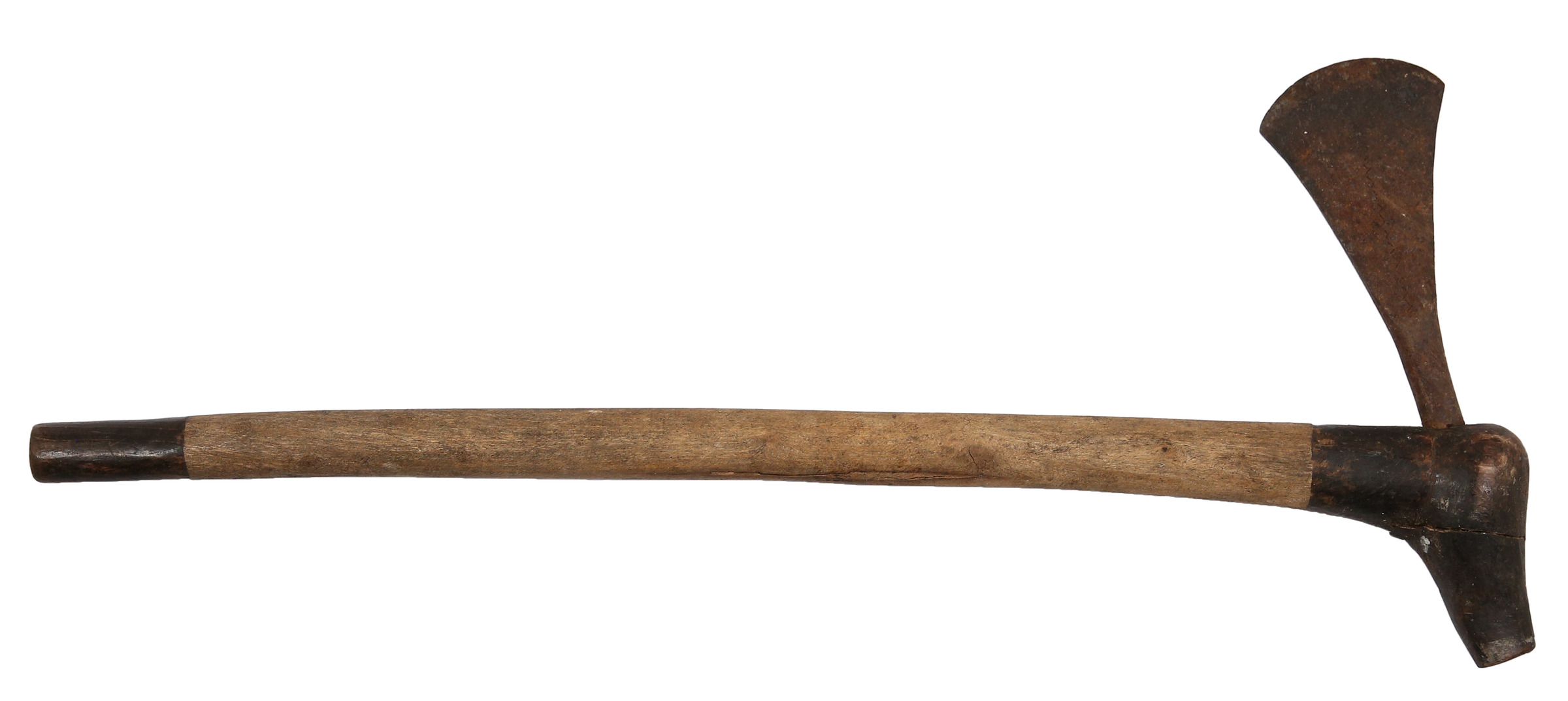
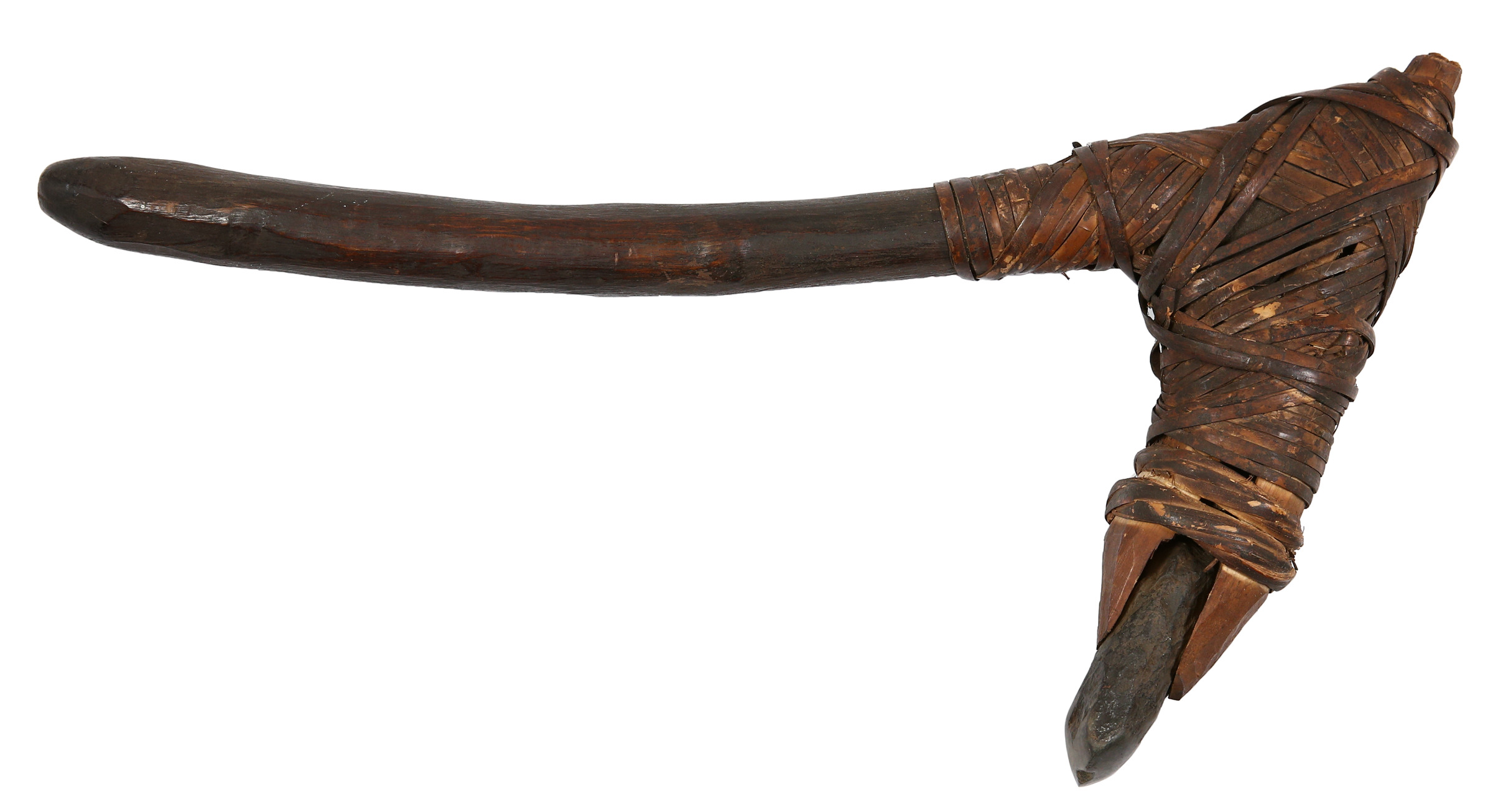
A long-handled wooden axe or implement, with dark tapered shaft and substantial head secured by overlapping strips of dark fibre or organic binding, exhibiting traditional construction and extensive wear; together with an African axe, having a long pale wooden haft fitted with a dark iron head, the latter of flattened, flaring form, accompanied by an explanatory collector's label.
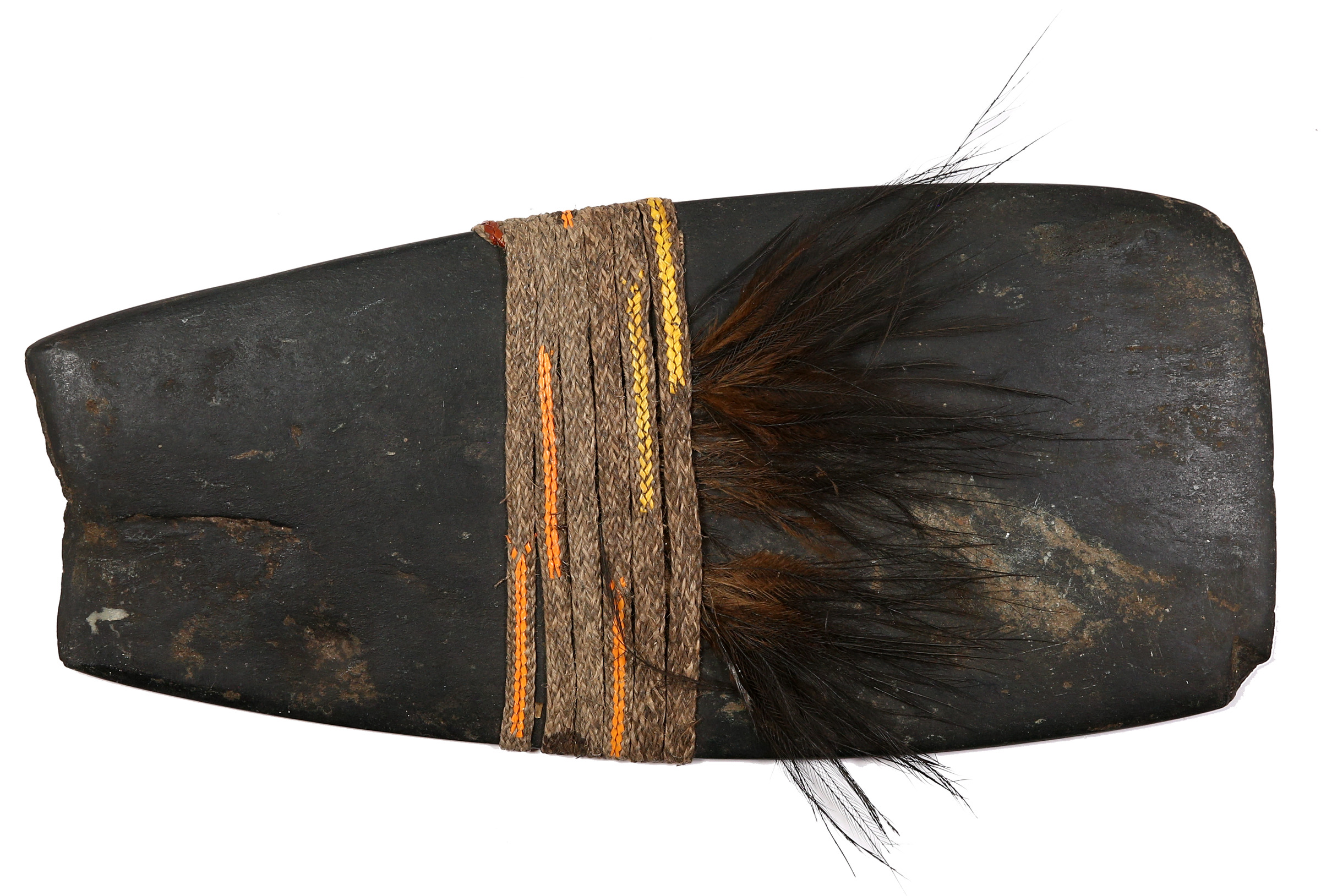
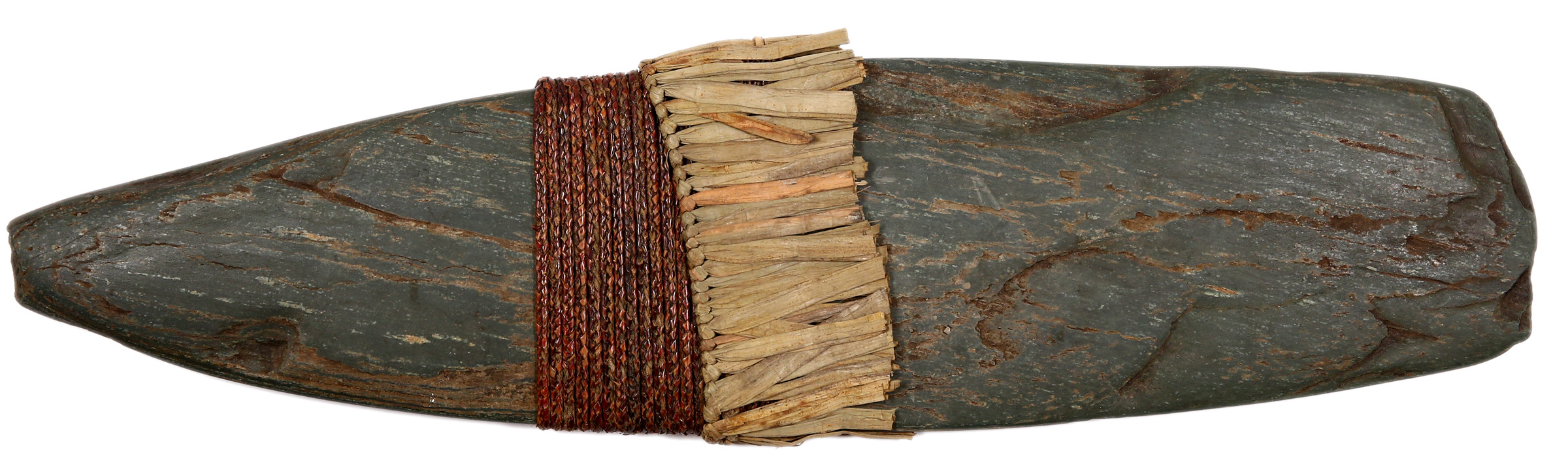
Western New Guinea (Indonesia), two dark stone ceremonial blades or ye stones, attributed to the Dugum Dani people of the Baliem Valley, each with central bindings of woven natural fibre, one incorporating coloured thread decoration and dark feathers. Comparable decorated stone blades were traditionally associated with ceremonial exchange, marriage payments and ancestral significance among Dani communities.
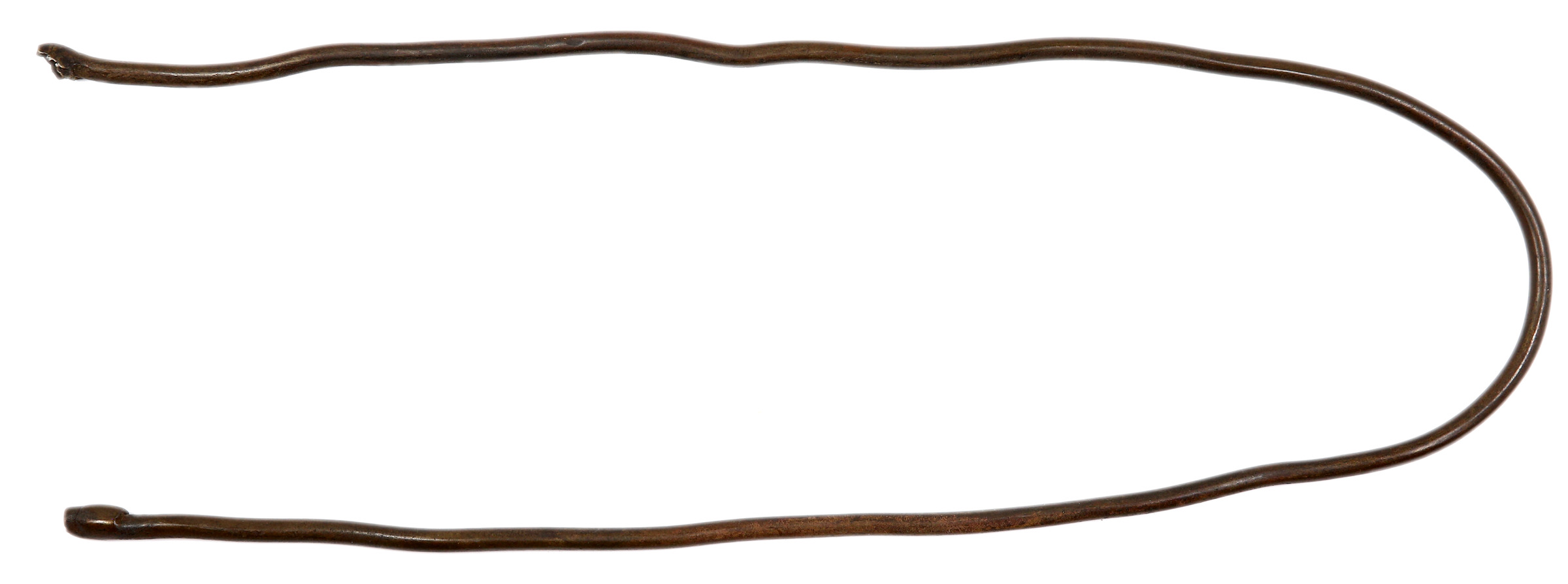
Nigeria, a long U-shaped copper-alloy Calabar currency bar, of rounded rod construction, with dark brown patination and flattened terminals. Such bars circulated as a traditional medium of exchange in the Calabar region of southeastern Nigeria.
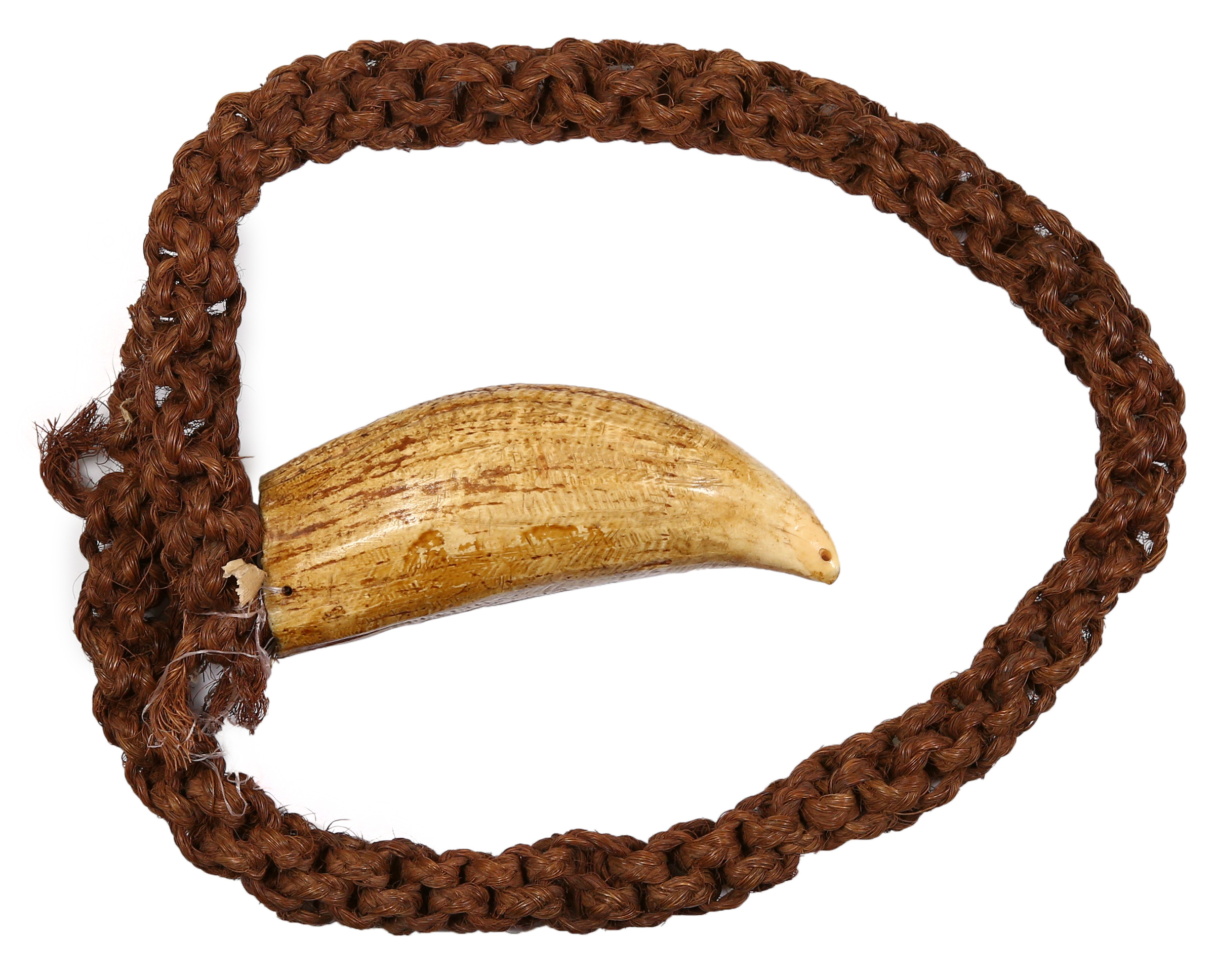
Fiji, an old ceremonial whale-tooth tabua, of elongated curved form, with polished yellow-brown surfaces and substantial plaited coconut-fibre suspension cord. Tabua were highly valued ceremonial objects traditionally presented during important social occasions, including marriages, reconciliations and chiefly exchanges.
The accompanying collector's label records that the tabua was presented in 1910 by the chief of Navaso village, Fiji, to B. L. Gregg, identified as Registrar-General and Chief Magistrate. This historical attribution remains unverified.
An interesting collection illustrating traditional ceremonial exchange, wealth and material culture across Africa and the Pacific, retaining original collector's labels and identification notes. Condition varying. The dark wooden axe or implement with extensive age-related surface wear, abrasions, discolouration and deterioration to the overlapping bindings, including loose and displaced strips. African axe with oxidation and surface corrosion to the iron head, and general wear, staining and abrasions to the wooden haft. Dani stone blades with darkened surfaces, scratches, abrasions and edge wear; woven fibre bindings with fraying and discolouration, coloured threads and feather decoration exhibiting wear and some losses. Calabar bar with dark brown patination, oxidation, surface marks and minor irregularities to the rod and terminals. Fijian tabua with natural yellowing, scattered darker staining, surface scratches, fine age-related marks and minor edge wear; plaited coconut-fibre cord with fraying, wear and deterioration to some strands. Original explanatory labels with minor creasing, handling wear and discolouration. Fine to very fine (6 items.)
Ex Alan McRae collection. Accompanied by original collector's explanatory labels, including the attribution of the two ceremonial stones to the Dugum Dani of the Baliem Valley and the Calabar bar to Nigeria. The Fijian tabua retains a label recording its alleged presentation in 1910 by the chief of Navaso village to B. L. Gregg; the presentation details have not been independently authenticated.
- Estimate
- $400
- Result Status
- Not offered