
Lot 2888
Sale 138 · Important Australian, British, World, and Ancient Coins, Banknotes, and Medals
Images
Description
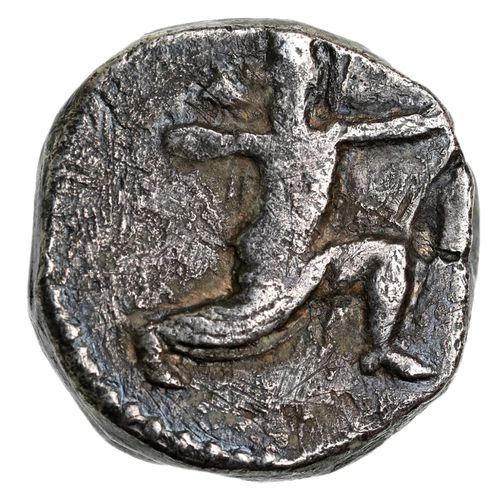
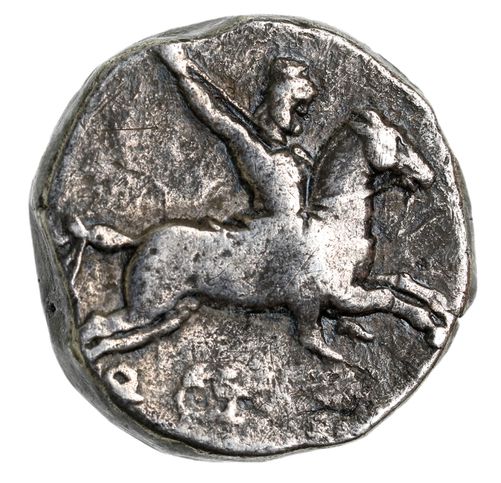
Caria/Ionia, Achaemenid Empire, satrapal coinage, time of Artaxerxes II to Artaxerxes III, c.400-340 B.C, silver tetradrachm (14.87 g), obv. Persian Great King kneeling right, drawing bow, rev. bearded horseman galloping right armed with spear, wearing low-topped Persian tiara, horse's tail docked and tied, ankh and wreath below, (Konuk Influences Group I, cf.Traite Pl.XCI 17, Price "The Syria 1989 Hoard' in Essays Carson/Jenkins 7 (who leaves it to an uncertain satrap), Pixodarus Hoard Meadows, Coin Hoards IX, Pl. 30 1ff., Dewing 2715). Fine - nearly very fine and very rare.
Ex Professor Brindley Collection, acquired from Baldwins, London Sale 34, October 13, 2003 (lot 82) and possibly from the Pixodorus Hoard ^One possible source might be the satrap Memnon (336-333 BC), originally the governor of Lydia, and after the defeat of the Persians at the Granicus, the supreme commander of Persian forces in the west. Memnon came to the assistance of Rhoontopates of Caria, but after the fall of Halikarnassos conceived the bold plan of carrying the war to Greece itself, where the Spartans and other Greeks, chafing under Macedonian rule, offered potential allies. Darius provided him with the funds to equip a fleet and mercenary army, but after capturing Chios and part of Lesbos, Memnon died of illness before he could reduce Mytilene, a rear base necessary to support his invasion fleet. The Persian king on these tetradrachms might represent Memnon's lost capital at Sardes (the mint for Persian darics and sigloi in the west) as well as the treasure provided by Darius to support his operations against Alexander (courtesy of CNG).
- Estimate
- $1,500
- Result Status
- Sold
- Prices Realised
- $1,500