
Lot 3042
Sale 135 · Important Australian, British, World, and Ancient Coins, Banknotes, and Medals
Images
Coin 1
Coin 2
Coin 3
Description
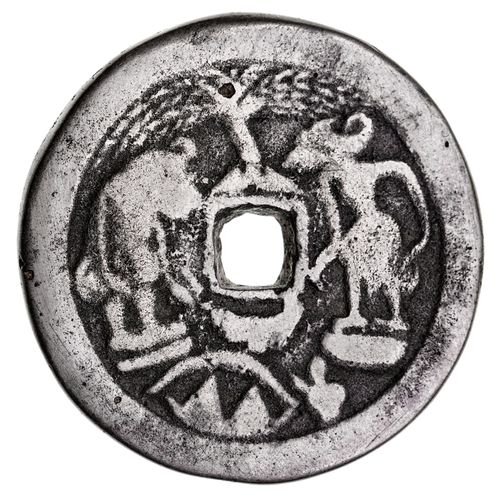
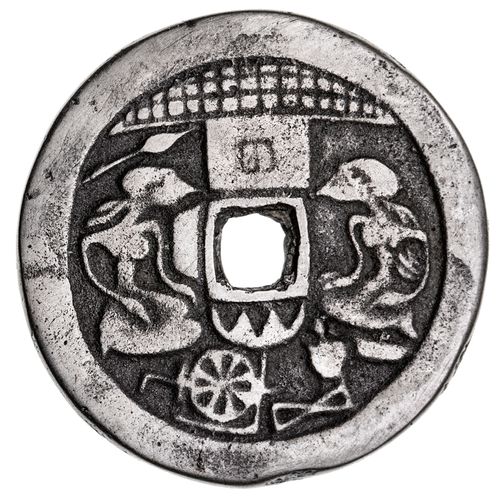
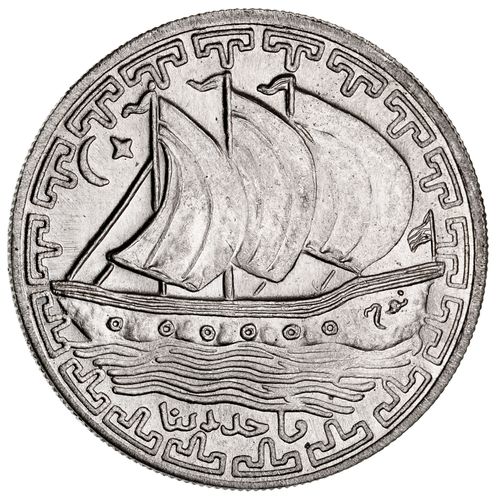
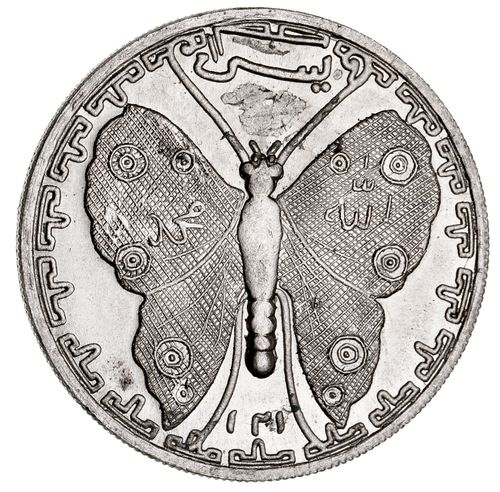
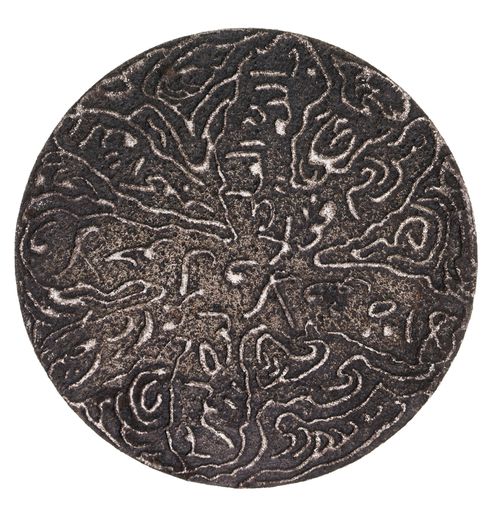
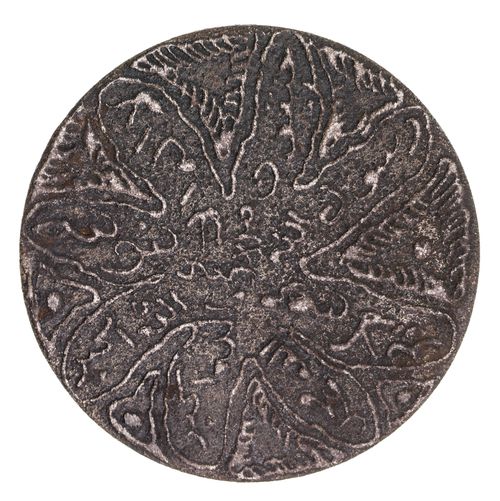
Indonesia, a diverse collection, housed in a red coin album of various temple or religous tokens crude 39mm diam. with square hole with Java symbols (2, one illustrated); larger types 48-61mm diameter (6) described as Pilgrim tokens; others are "Javanese magic coins" or Haj Tokens from Malay Peninsula or Java some struck in debased silver with ships or pilgrim obverse (man advancing right) these mostly with butterfly reverses (4, one illustrated); others iron types with irregular designs (including Arabic legends), (12) 46-50mm diam some with circular (4) or square (1) holes, (one illustrated). Fine - nearly uncirculated. (22)
Ex Ken O'Brien Collection.
Javanese "magic coins" and temple coins often feature Arabic and Malay inscriptions and tend to have metallic compositions very similar to Chinese cash coins which supports the idea that many of these coin-like amulets are in fact melted down Chinese cash coins turned into amulets. The first Gobog amulets in Java appeared during the Majapahit Empire, these Gobogs depicted Wayang characters and general Hindu mythology while after Islam was introduced to Java Arabic writing started appearing on Gobogs. Gobog Wayang amulets with materials containing copper and brass were known to be produced during the 18th century.
According to Panji, a numismatic from Yogyakarta, the function of Gobog amulets is as a complement to the requirements or ritual offerings in Java and the images on them depict the culture and religion of the Javanese community at that time. The Gobog itself symbolises both metal and money. Even though Gobog amulets symbolise money and are based on Chinese cash coins they don't have a nominal value and only feature religious symbols and Wayang stories on them.
Gobog Wayang coins are a kind of "'temple medals " that are comparable to the temple coins from China and Japan. Dutch numismatists Netscher and van der Chijs said that the Gobog Wayang coins were made in accordance to the pre-Islamic Hindu-Buddhist tradition in Java. They also got this explanation from old Javanese people, who said that the Gobog was a coin that had once circulated as a means of payment. One Gobog is the same as 5 Keteng (a Chinese cash coin, which once commonly circulated in Java). (Wikipedia comment).
- Estimate
- $100
- Result Status
- Sold
- Prices Realised
- $320