
Lot 3561
Sale 133 · Important Australian, British, World, and Ancient Coins, Banknotes, and Medals
Images
Description
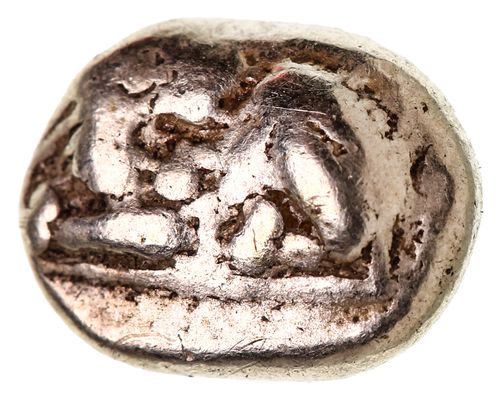
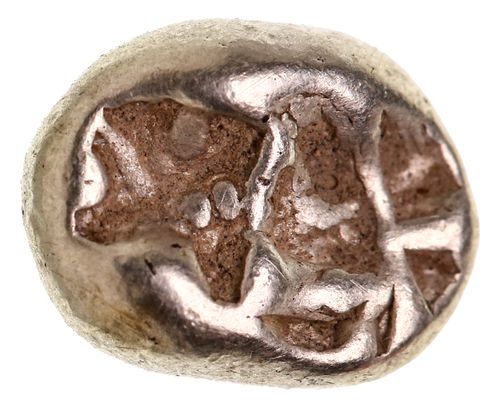
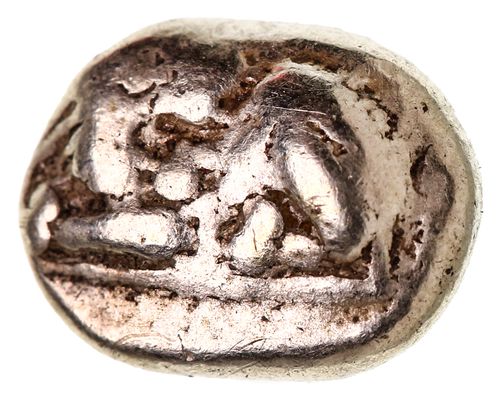
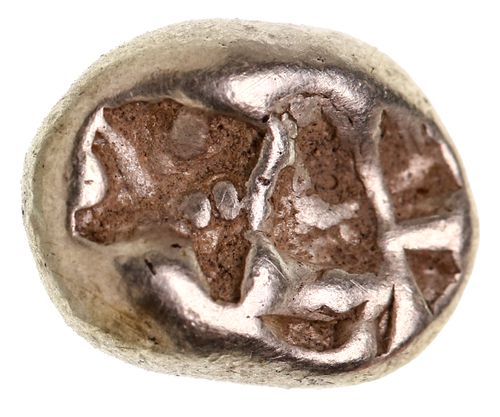
Ionia, Miletos, (c.600-546 B.C.), electrum sixth stater or hekte, (2.29 g), obv. lion lying to left head reverted, rev. incuse punches between two small squares, within right square various lines of uncertain structure, left square four dots joined by lines. (cf.S.3443 Klein KM 414 [Nomismata 3], Weidauer 129 [Same Dies], cf. M&M list 536, No.20, Hilbert Period 1, cf.SNG Kayhan 443). Very fine and very rare.
Ex Munzen & Medaillen Deutschland Auction 10 Sale, March 22, 2002 (lot 114, illustrated).
The earliest coins were made in Western Turkey in about 600 B.C., out of electrum, an alloy created out of gold and silver. These electrum staters were made at three weight standards known today as the Phocaic, the Euboic and here (in this coin) the Milesian. The earlist coins have a design on one side and the reverse struck from three crude punches. As the coinage evolved these reverse punches evolved as is present on this coin, (one of the rarest and most interesting of ancient coins), into a new design and a pattern. The earliest this probably happened was near the middle of the first half of the sixth century B.C. The attribution to Miletos is fairly certain as the lion with reverted head remained the type of Miletus for another four centuries, it also shares this weight standard with Lydia.
- Estimate
- $1,500
- Result Status
- Sold
- Prices Realised
- $1,500