
Lot 4001
Sale 52 · Important Australian Coins & Banknotes
Images
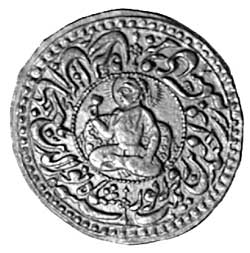
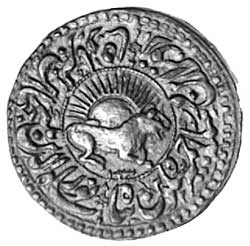
Coin 1
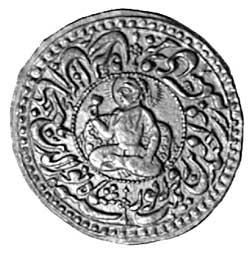
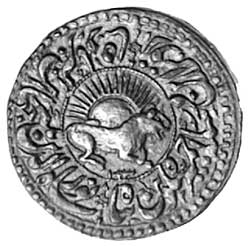
Description
Jahangir, (A.H. 1014-1037, A.D.1605-1628), Portrait round Gold mohur, (11.0 grams), struck at Ajmer mint, issued A.H. 1023 (A.D. 1614-5), Regnal Year 8, obv. seated cross-legged figure of Jahangir with radiate head to left on Mogul throne, holding goblet in right hand, within inner dotted circle, legend around, rev. in centre lion to right surmounted by sun, the script around, this as a distich or couplet on both sides [see below for translation], (BMC 318 [same dies, see Plate IX], R.B. Whitehead [Numismatic Chronicle 1929] type VIII [p. 24-5], Plate 1 No.6 [the BM coin, same dies], KM. 179.5). Extremely fine and extremely rare.
The distich or the couplet reads 'On the face of the golden coin, ornament and grace gave, the picture of Shah Nur-ad-din Jahangir, son of Akbar Shah. The Shah, refuge of the faith, struck this coin of gold at Ajmir, Shah Nur-ud-din Jahangir, son of Akbar Padishah.' This is one of the most notorious coins of the Islamic world, portraying the ruler lifting a goblet of the sort normally used for the drinking of wine. Like his father, Jahangir had departed from Islamic norms in a futile attempt to unify Islam and Hinduism into a united faith. His coins reflect the secularism prevalent during his reign, and also represent the finest form of the die engraver's art in Muslim India. Most famous are the portrait coins, such as this, and the Zodiac coins. From the sixth year of his reign he decided that coins should bear his effigy. These were struck and presented to amirs and specially favoured followers of the emperor. All types featured the same theme with a portrait of the emperor on one side with goblet, and a lion on the other side, both with the sun behind. A similar specimen, from the same dies, in nearly very fine condition, was in the Dr. Lawrence Brilliant Collection, Spink-Taisai Singapore sale 9, (lot 358).
- Estimate
- $12,500
- Result Status
- Sold
- Prices Realised
- $0