
Lot 4366
Sale 121 · Important Australian, British, World, and Ancient Coins, Banknotes, and Medals
Images
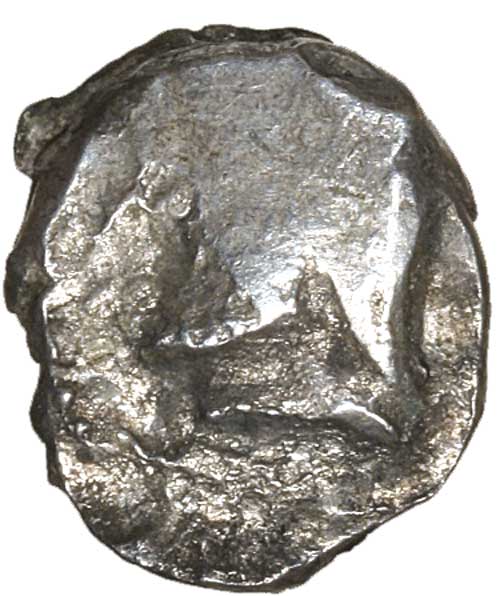
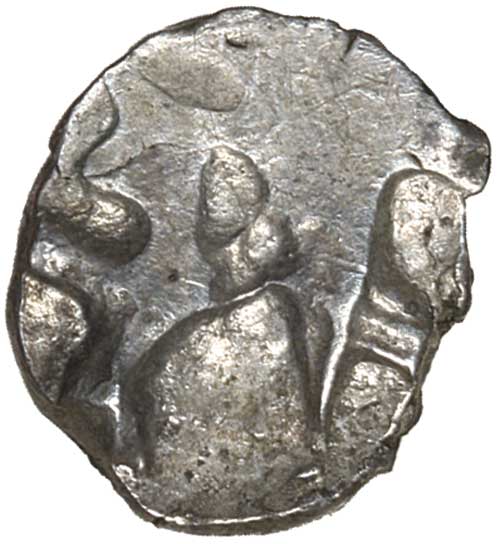
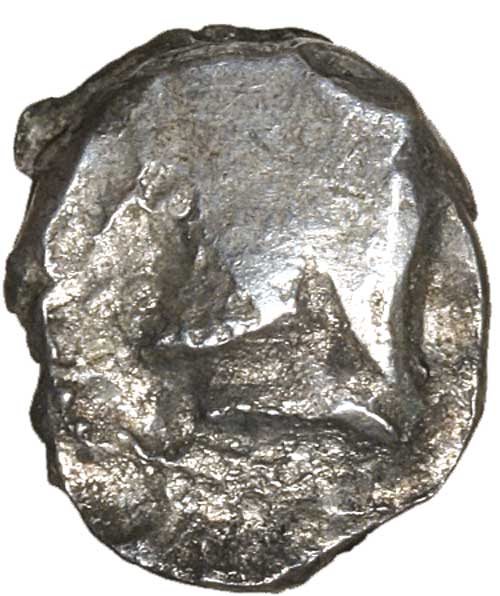
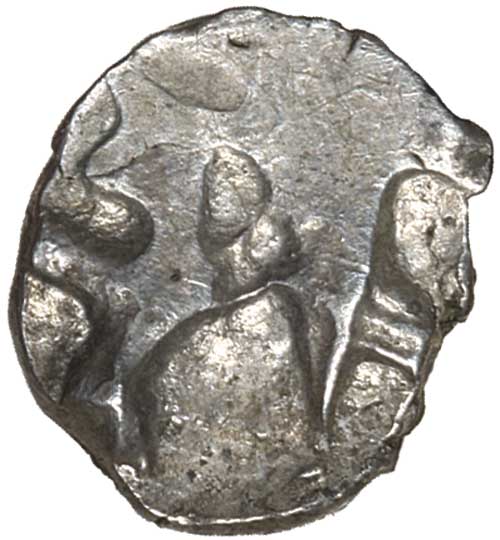
Description
Samaria, Satrap issue, (375-345 B.C.), silver obol, (0.68 gm), obv. head of bearded satrap to l., wearing Persian tiara, border of dots, rev. Persian king standing to l., fighting winged horned animal, he holds the animal horn in his r., and a dagger in his l. hand, on r. in Aramaic, off the flan [SMRYN], (Meshorer & Qedar "Coinage of Samaria" (CS), CS 3 (20 known), and Samaria Hoard No.18 (CS), (This Coin illustrated and described). Fine for issue, weak in places and very rare.
Ex Samaria Hoard (No.18) and Sotheby, Zurich Sale, October 27-8, 1993 (lot 989 part). This lot represents an opportunity to acquire a coin from the famous "Samaria Hoard" published in Meshorer & Qedar "Coinage of Samaria in the Fourth Century BCE", Jerusalem, 1991. Every coin in that hoard is illustrated with enlargements and this hoard together with a few other finds became the basis of establishing the existence of a series, of a nation in an era never previously recognised in the published literature. The meaning of the legend (which reads Samaria), remains uncertain, whether it means the city, the province or the state, or a combination of these meanings. By c.400 B.C, the Samaritans were still considered Jewish and as such were approached by the Jews of Elephantine. The Samaritan high priests and governors in the 5th and 4th century B.C. in the Elephantine documents bear Jewish names. The final separation between the Samaritans and the Jews probably took place a few years after the Samarian hoard's burial (c.346-5 B.C.). Consequently this coin forms part of a collection of Biblical coins.
- Estimate
- $100
- Result Status
- Sold
- Prices Realised
- $80