
Lot 5666
Sale 113 · Important Australian & World Coins, Medals, Tokens & Banknotes
Images
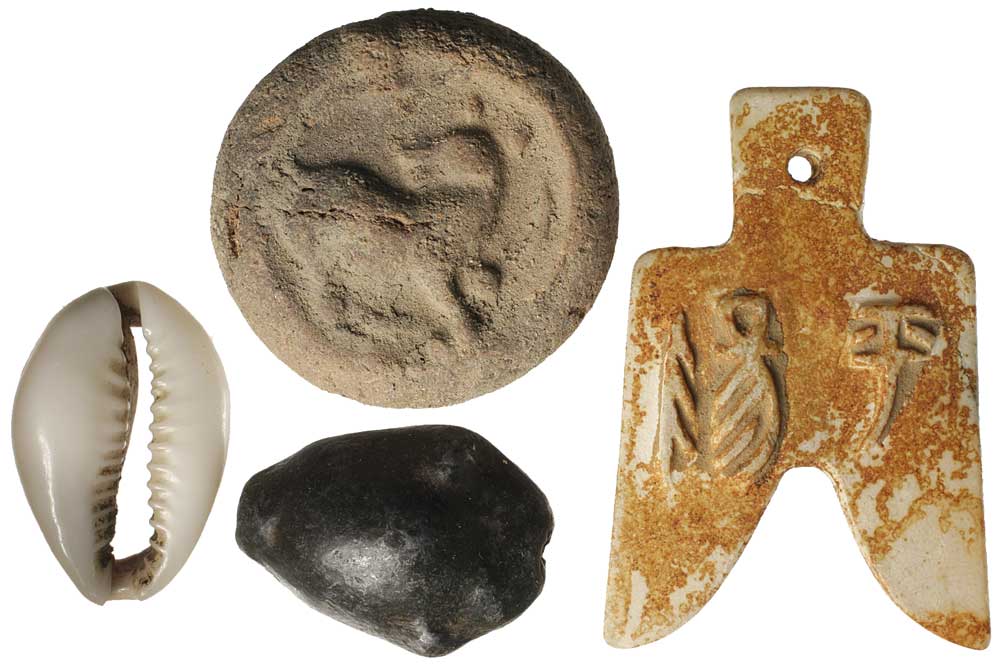
Description
China, Zhou Dynasty, anonymous issues (c.1000-220 B.C), cowrie 'money', lot of 17 cowrie (bei) 'money', black metal (lead) with nice tan patination (3 4.59 g, 8.42 g, 21.93 g) (last illustrated), bone imitation (7), stone imitation cowrie with holes at top for stringing, (4), gold plated bronze cowrie with vertical slit, encrusted (1), other cowries cut (illustrated) and bronze all with vertical slit, one encrusted (2) (Hartill 1.1-1.3), quantity of millet seed in packet (used as money 100 seeds = 1 ch'u); China pointed spade money in ivory or bone (illustrated); an interesting uniface baked prakab coins (baked clay coins) as made in Thailand for king Boromokote of Ayutthaya (1733-1758 A.D.), (cf.LeMay pl.XXXII#9-14, Mitchiner Non-Islamic #2867, Coins in Thailand p.38-39. Taisei 2/94 Sale, Lot 1023), (32) (one illustrated). Mostly fine - very fine and generally rare. (lot)
An interesting collection. The Cowrie shells, in Chinese called bŠi, were used as money probably since around 2000 BC, from the Shang dynasty up through the Zhou dynasty. The cowries were an intelligent solution to the need for "small money" because they were collected in seas far south of China and only kings could afford to import them. Furthermore natural shells were impossible to counterfeit. Later imitations were made of various materials: bone, stone, mother of pearl, jade, clay, bronze, and even silver and bronze with gold plating. Whether imitations were burial money or not is difficult to tell. This could very well be the case with the pottery, bone and stone, but the cast bronze imitations were likely used as money.
- Estimate
- $200
- Result Status
- Sold
- Prices Realised
- $180