
Lot 4532
Sale 111 · Important Australian & World Coins, Medals, Tokens & Banknotes (40th Anniversary Sale)
Images
Description
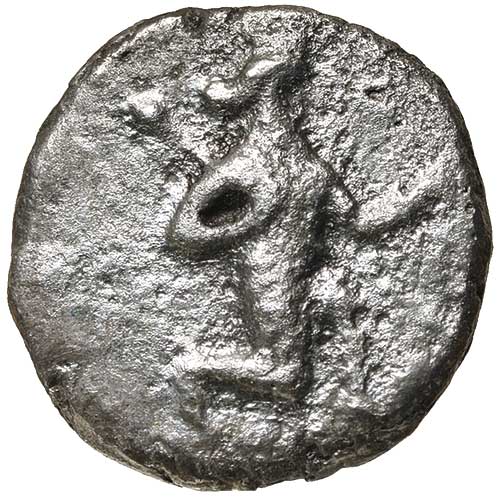
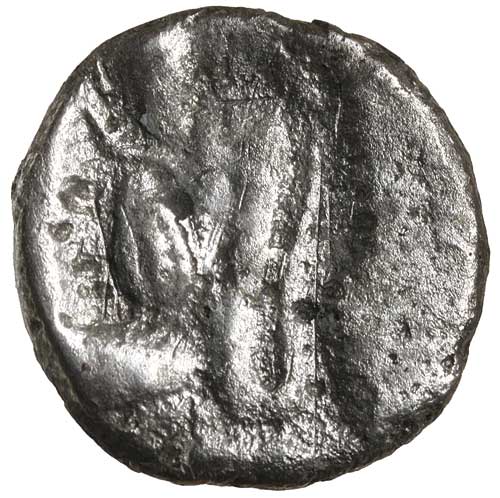
Ionia, Achaemenid Period, uncertain satrap, (Circa 350-333 B.C.), silver drachm 14mm, (2.99 g), uncertain mint, obv. the Persian king, wearing kidaris and kandys, in kneeling-running stance right, holding spear in right hand, bow in left, rev. incuse rectangle, containing pattern possibly depicting relief map of the hinterland of Ephesos, (S.-, CNG Triton XVIII [lot 606] publishes a very similar example probably from the same reverse die, cf.BMC 324 [two and a half sigloi], cf.Traite Pl.89, 8 [tetradrachm]). Very fine porous surface, with cleaning marks, the second known example.
Ex Pars Coins with his ticket.
Johnston has interpreted this remarkable reverse design as a relief map of the hinterland of Ephesos, which would make it the earliest Greek map and first physical relief map known. On the right (north) are the mountains Tmolos and Messogis between the river valleys of the Ca˜ster and Maeander, to the left of which are three mountain ridges (Madranbaba Dagi, Karincali Dagi, and Akaba Tepesi). Johnston follows Six in suggesting that the coins were probably struck at Ephesos under the Persian general Memnon of Rhodes, circa 336-334 BC, in order to pay his army after he had captured the city, but before his defeat by Alexander at the Battle of Granicus in 334. Some issues have names on the obverse, which Six and Johnston think were city magistrates who authorized some issues for Memnon. However, the theory of Six and Johnston has been the subject of some doubt, most recently by Leo Mildenberg.
- Estimate
- $800
- Result Status
- Passed in