
Lot 4890
Sale 107 · Important Australian & World Coins, Tokens, Medals & Banknotes
Images
Description
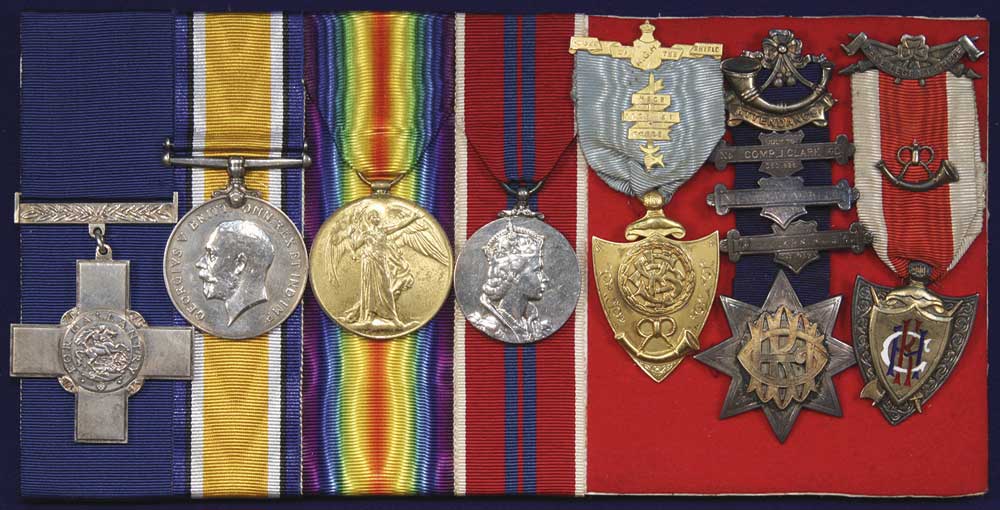
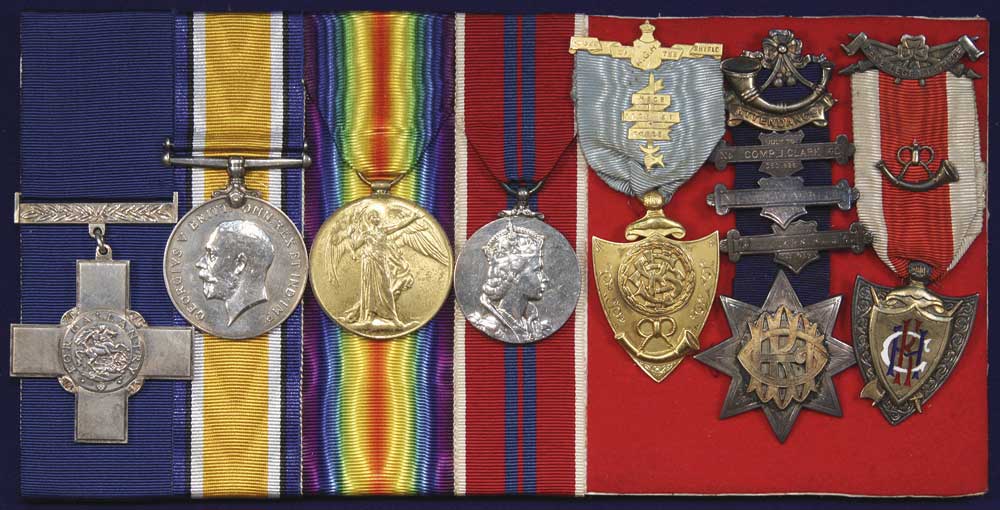
GC Group of Four: George Cross; British War Medal 1914-18; Victory Medal 1914-19; Coronation Medal 1953. Joseph Clark 3rd May, 1927 on first medal, 376563 Gnr. J.Clark. R.A. on second and third medals, last medal unnamed. All named medals impressed. Display mounted, very fine - extremely fine.
Together with three medals issued by the Grand United Order of the Knights of the Golden Horn (derived from the Royal Antediluvian Order of Buffaloes). These medals in order of mounting are as follows,
1. Third degree Knight of the Shield in gold (14ct; approx 12g), 'Presented to J. Clark, K.O.S. by the Comrades of the No.40 W.E. Kirby Encampment of the G.U.O. of the K.G.H. in recognition of His Valuable Services to The Camp and Order Dec. 22nd 1932'.
2. First degree Attendance jewel in silver has three clasps namely July to Dec 1926 to Comp. J. Clark, another Jan to June 1931 to Kt. J. Clark, and the third July to Dec 1932 to J. Clark K.O.S. The medal is inscribed, 'No.40 W.E. Kirby Encampment Comp. J. Clark For Half Year Ending Jany to June 1926'.
3. Second degree Knight of the Order in silver, 'No.40 W.E. Kirby Encampment Kt. J. Clarke (sic) Installed March 6th 1928'.
Empire Gallantry Medal: LG 3/5/1927, p2873 - to John Beattie and Joseph Clark - On 19th November 1926, they showed outstanding gallantry in making persistent attempts to rescue a miner imprisoned in a narrow tunnel, although in grave personal danger from falling debris, gas and spontaneously generated heat.
Exchanged for George Cross when the Warrant establishing the new award was approved by the King in 1941.
Joseph Clark, born c1885, miner at Trimdon Grange, Durham, England; died 01Mar1965.
A more detailed account of the events at Trimdon Grange on 19 November 1926 is as follows: During industrial depressions it was the practice of miners, at least in County Durham, to dig for discarded coal in the pit heaps. At Trimdon Grange two local men entered an abandoned cavern to obtain coal when the sides caved in, partially burying Herbert Owens, age 21, of Oswald Row. His perilous position was soon realised, but while men were tunnelling to extricate him, a further collapse of the sides took place, completely burying the men.
The would-be rescuers increased their efforts to release Owens, and three times ropes were passed under his shoulders and attempts made to pull him out. The unfortunate man, however, was wedged in and the sides continued to fall. Shoring the sides with timber was resorted to. At five p.m. it was decided to make a new tunnel into the heap to endeavour to release him, and shifts of six men, wearing gas helmets, worked frantically, but it was ten p.m. before Owen's was got out. His body was in a very bad condition, being almost burned, owing to the burning nature of the heap.
Playing leading roles in this drama were two local men, John Beattie and Joseph Clark, who with total disregard of their lives faced extreme danger.
With research.
- Estimate
- $10,000
- Result Status
- Sold
- Prices Realised
- $13,000