
Lot 3507
Sale 104 · Important Australian & World Coins, Medals & Banknotes
Images
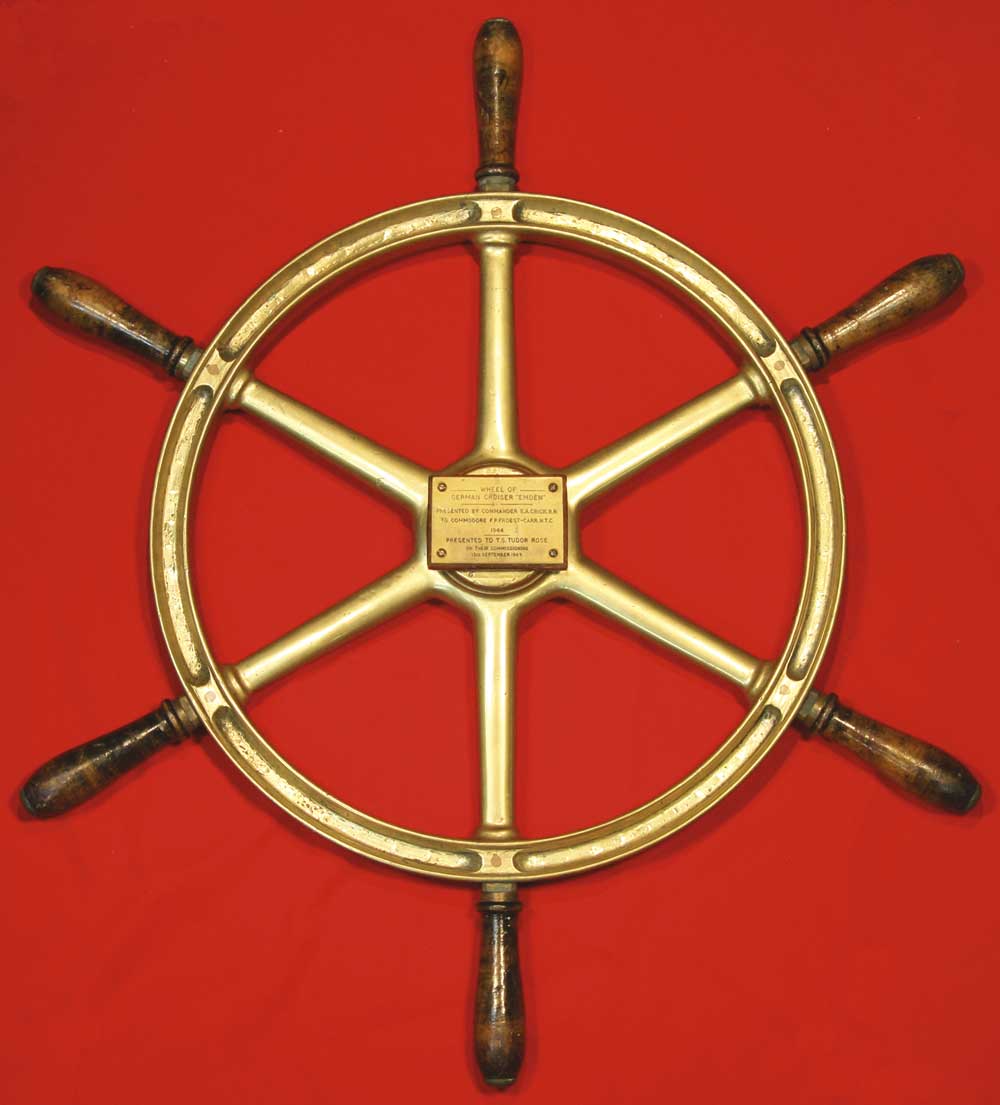
Description
SMS Emden (1916) Ship's Wheel, solid bronze with varnished wooden handles, measures 65cm from handle to handle and weighs 9.7kg, in the centre is a commemorative brass plaque on timber which measures 56x81mm, this is inscribed, 'WHEEL OF/GERMAN CRUISER "EMDEN"/PRESENTED BY COMMANDER E.A.CRICK.R.N./TO COMMODORE F.P.FROEST-CARR.N.T.C./1944/PRESENTED TO T.S.TUDOR ROSE/ON THEIR COMMISSIONING/13TH SEPTEMBER 1969'. Very fine.
Ex The Antiques Storehouse Ltd, Portsmouth, England.
Commander Crick served on board HMS Cardiff of the Sixth Light Cruiser squadron during the later part of World War 1. His career is documented in the book, Spun Yarn & Bell Bottoms, published by United Writers, Cornwall. He would have obtained the ship's wheel after the attempted scuttling of the Emden at Scapa flow on 21 June 1919.
The wheel was later presented to the British Royal Navy Nautical Training Corps which was founded in 1944 by Commodore, F P (Frank) Fro�st-Carr. It was then presented to Training Ship Tudor Rose which was run by The Corps.
SMS Emden II was a German light cruiser belonging to the K�nigsberg class, built during WWI. The ship was named after the previous Emden, which had been destroyed by HMAS Sydney at the Battle of Cocos in November 1914. She mounted an Iron Cross on her stem-head in honour of the earlier Emden. The new cruiser was laid down in 1914 at the AG Weser shipyard in Bremen, launched in February 1916, and commissioned into the High Seas Fleet in December 1916. Armed with eight 15 cm SK L/45 guns, the ship had a top speed of 27.5 knots (50.9 kmh; 31.6 mph). After her commissioning, she was assigned to serve as a flotilla leader for torpedo boats. She participated in only one major action, Operation Albion, in October 1917 where she shelled Russian gun batteries and troop positions and engaged Russian destroyers and gunboats. The ship was also successful in operations against British shipping in the North Sea in December 1917.
After the war ended, she was interned with the rest of the German fleet at Scapa Flow. On 21 June 1919, the interned fleet scuttled itself, however Emden was run aground by British ships before she could sink completely. She was ceded to France in the Treaty of Versailles, but was too badly damaged to serve with the French Navy, so was used as a target after 1922, and broken up for scrap in 1926.
- Estimate
- $3,000
- Result Status
- Passed in