
Lot 3376
Sale 104 · Important Australian & World Coins, Medals & Banknotes
Images
Description
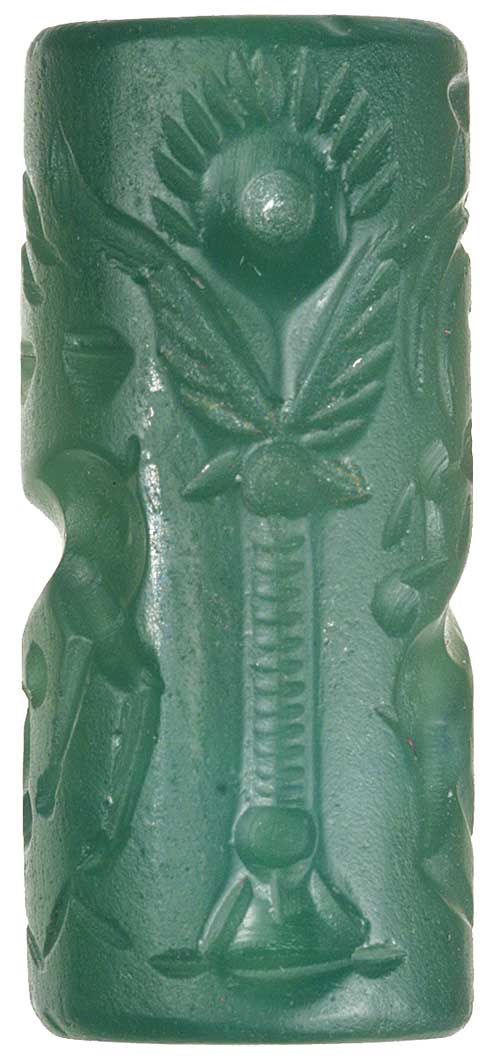
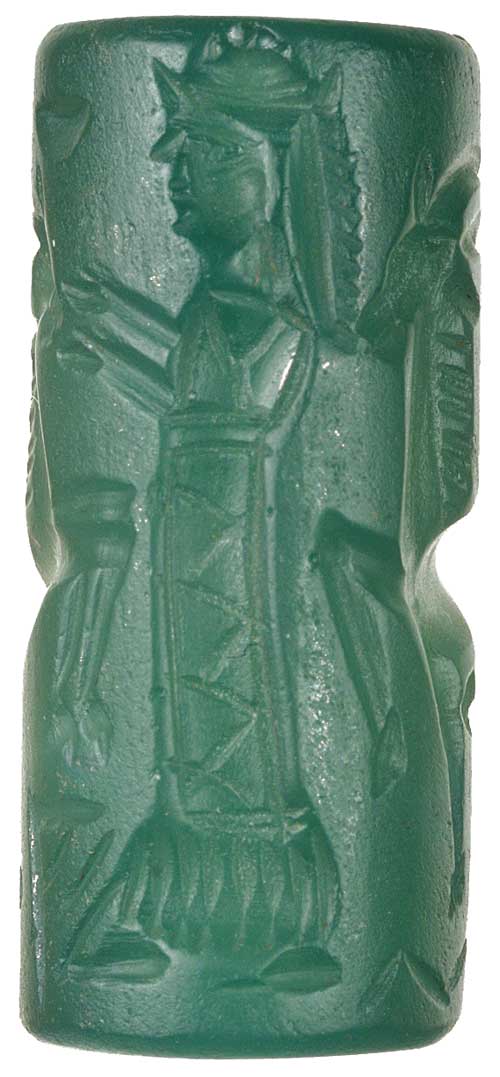
Iraq, Mesopotamian, Akkadian Empire, greenstone cylinder seal with carved figures tree, antelopes behind and before facing a standing god figure (length 3cm), c.2350-2150 B.C. Very fine.
A cylinder seal is a small round cylinder, typically about one inch in length, engraved with written characters or figurative scenes or both, used in ancient times to roll an impression onto a two-dimensional surface, generally wet clay. Cylinder seals were invented around 3500 BC in the Near East, at the contemporary site of Susa in south-western Iran and at the early site of Uruk in southern Mesopotamia. They are linked to the invention of the latter cuneiform writing on clay cylinders. They were used as an administrative tool, a form of signature, as well as jewellery and as magical amulets; later versions would employ notations with Mesopotamian hieroglyphs. In later periods, they were used to notarize or attest to multiple impressions of clay documents. Graves and other sites housing precious items such as gold, silver, beads, and gemstones often included one or two cylinder seals, as honorific grave goods. This intricately carved cylinder seal occurred during this Uruk period.
- Estimate
- $300
- Result Status
- Sold
- Prices Realised
- $550