
Lot 3466
Sale 103 · Important Australian & World Coins, Tokens, Medals & Banknotes
Images
Description
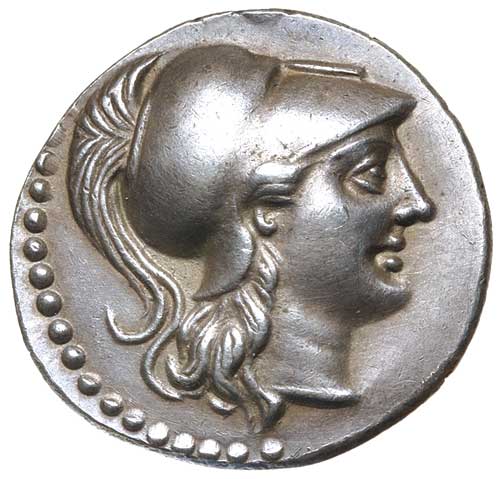
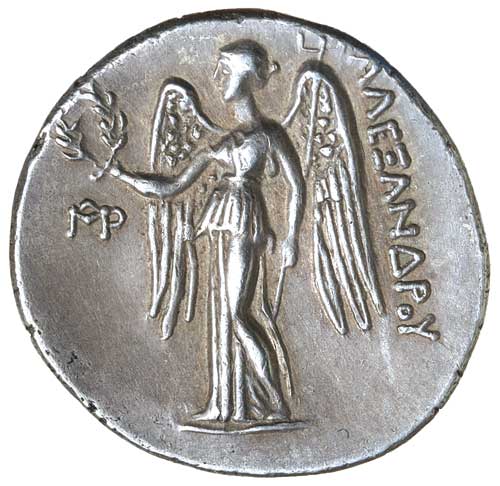
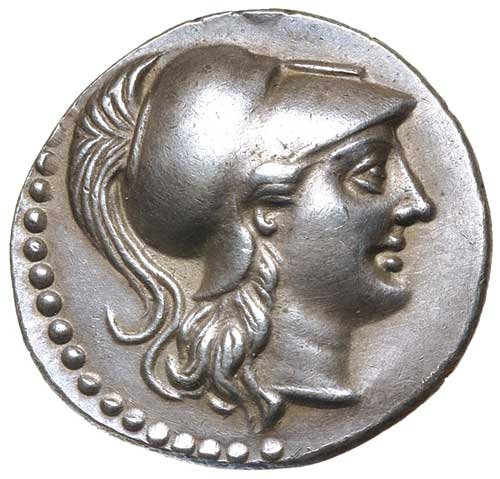
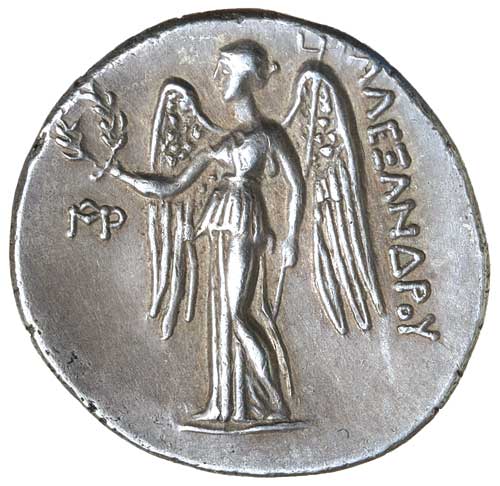
Macedon, Kingdom of, Alexander III, (336-323 B.C.), silver drachm, (4.44 g), Marathos in Phoenicia, mint (c.230-225 B.C.), obv. head of Athena right wearing a crested Corinthian helmet, dotted border, rev. Nike standing to left, holding a wreath and stylis, monogram MAP outer left field, to right **ALEXANDROU*, (s.-, Price -, BMC Phoenicia p. xlii, A = Babelon, Perses 1439 = Rouvier 781 = De Luynes 3164, Houghton 940 [listed as Alexander I Balas]). Extremely rare, toned and extremely fine.
On the Mediterranean, the city of Marathos (Amrit) lay under the dominion of Arados (Arwad). Both surrendered in about 332 BC to Alexander the Great, whose gold staters this type most clearly imitates. Until fairly recently it has been traditionally assigned to the beginning of Marathos coinage as the type was only known from the Paris de Luynes coin and the Houghton published example. The discovery of some Marathos drachms with a group of coins of Seleukos II has brought the known number up to a handful or so, while it has brought the likely issuance date down to c.230-225 B.C. This new evidence is helpful, but the issue still remains much an enigma. There is an extremely rare tetradrachm, bearing the ethnic, from this period, and it may be that these drachms served as an auxiliary fractional coinage. In about 219 B.C., Marathos gained its independence from Arados and perhaps at this time these events lead to this coinage. The issuance of a high-value silver coin would indicate that Marathos had achieved a great measure of autonomy. But Marathos did not stay long free of the shadow of Arados. In 148 B.C., Arados sacked the city, and Marathos was abandoned soon afterwards.
- Estimate
- $2,000
- Result Status
- Sold
- Prices Realised
- $2,400