
Lot 2289
Sale 103 · Important Australian & World Coins, Tokens, Medals & Banknotes
Images
Description
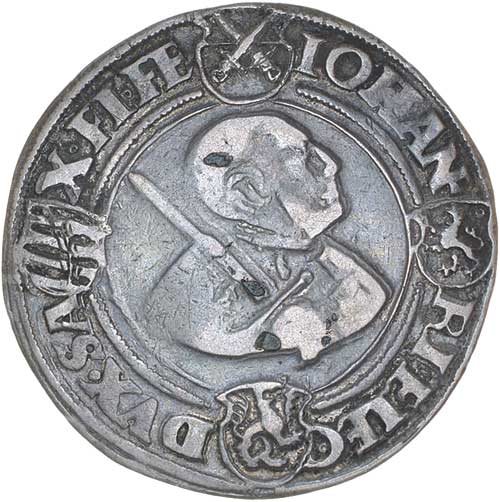
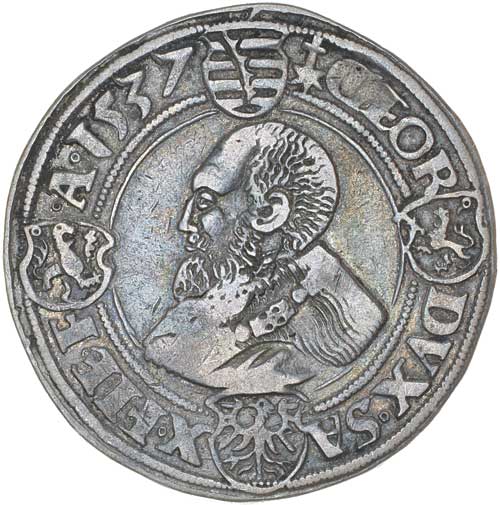
Germany, Sachsen-Kurfurstentum, Elector Johann Friedrich I and Georg der Bartige, Duke of Saxony, (1532-1554), silver taler (28.59 g), Annaberg mint, dated 1537, obv. IOHAN FRI ELE C DVX SAX FI FE, bare-headed and mantled bust of Johann Friedrich I right, holding sword in right hand upright against right shoulder, around, elements of the coat-of-arms of Sachsen-Kurfurstentum, mm.ermine, rev. GEOR DVX SA X FIE F A 1537, bare-headed and mantled bust of Georg left, wearing the Order of the Golden Fleece, (Schnee 72, Schulten 3060, D.9721). Fine/nearly very fine, rare.
Ex Alan Jordan Collection. Frederick III of Saxony began the production of talers in Germany in 1500, and the mints of Saxony moved from the capital, Dresden, to be near the mines of Annaberg, Freiberg and Schneeberg. The size of the taler offered great scope for engravers to produce fine portraits and elaborate versions of dynastic emblems for German princes. Since 1485 Saxony had been partitioned between two branches of its ruling Wettin dynasty. Duke Georg, the current ruler of Albertine or Ducal Saxony, proved to be one of Luther's most implacable enemies until he died in 1539. Friedrich the Wise's territorial section was smaller than Albertine Saxony, but he did have one crucial advantage by having the title of elector, which gave him a pivotal role in the politics of the entire Holy Roman Empire. The emperor had to be wary of Friedrich, and that became of great significance when in later years Europe's mightiest ruler was anxious to destroy Friedrich's patronage of Martin Luther.
- Estimate
- $250
- Result Status
- Sold
- Prices Realised
- $350