
Lot 4066
Sale 102 · Important Australian & World Coins, Tokens, Medals & Banknotes
Images
Description
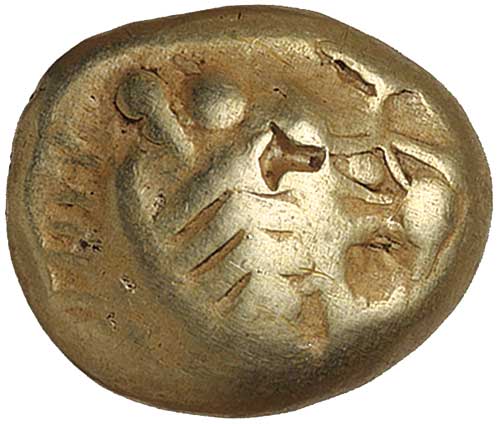
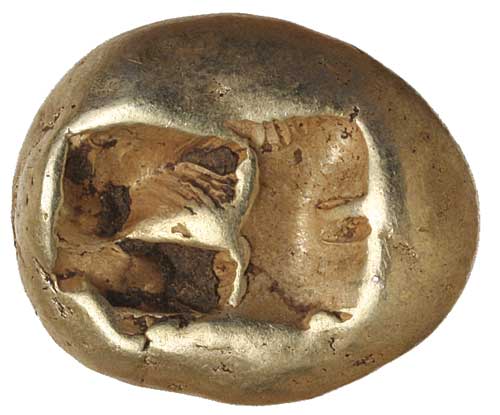
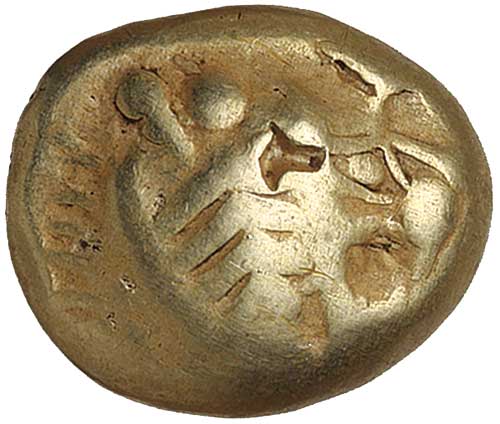
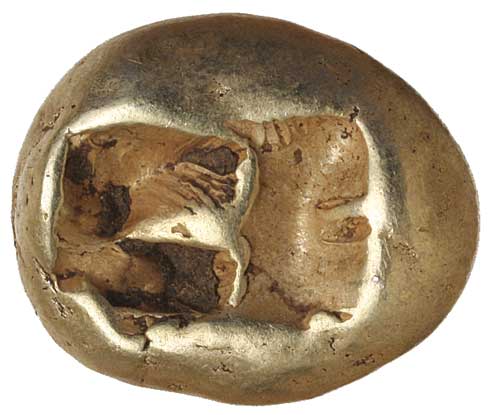
Lydia, uncertain king, issued before 561 B.C. and probably c.575 B.C., electrum trite or third stater, (4.65 g) of Lydian-Milesian (Phoenician standard), probably issued at Sardeis, obv. head of roaring lion to right, knob with three rays on forehead [off flan], rev. double incuse punch, (S.3398, BMC 7 [p.2], Weidauer [Essays to Robinson] Class XVI, Weber 5710, SNG Cop. 449-451, ACNAC Rosen 231, ACNAC Dewing 2421-3, Boston 1768). Good fine with several interesting countermarks and rare.
The find of early electrum as a foundation deposit in the earliest temple at Ephesus included numerous third staters of this type. It also contained some inscribed electrum coins with the non-Greek name `Welwet'. Scholars began identifying this name with Alyattes, king of Lydia. Since then this attribution has been thrown into doubt by the more recent discovery of a parallel name, `Kagi', which does not correspond to any known Lydian king. No one really doubts, however that this prolific coinage was issued by the Lydian royal house. The lion's head was the dynastic badge, and this manner of representation, with the herringbone mane and `wart' on nose, was introduced into Greek art from Assyria in the second half of the seventh century B.C. It is one of, if not the earliest example of ancient coinage that utilises a design of some type on the obverse. This example with an unusual number of banker's marks adds further interest to this early coin.
- Estimate
- $1,200
- Result Status
- Sold
- Prices Realised
- $2,100