
Lot 2488
Sale 102 · Important Australian & World Coins, Tokens, Medals & Banknotes
Images
Description
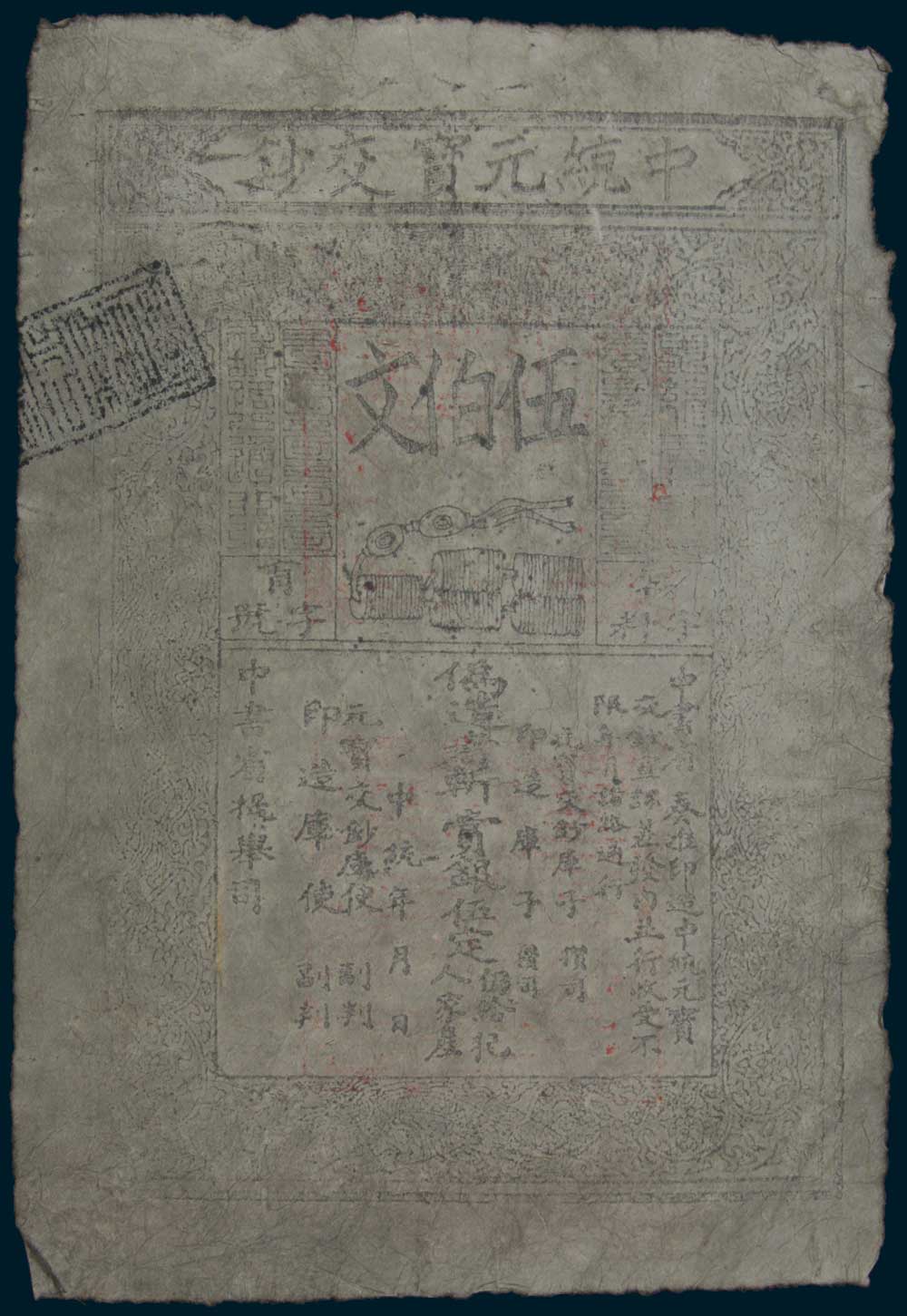
China, Yuan Dynasty, under grey/black mulberry tree bark paper note for five hundred cash or five hundred wen, an issue reading at the top 'Zhong Tong Yuan Bao Jiao Chao' type of the second reform called 'Zhong Tong Chao', size 192x290mm, issued from 1260-1287, (Editorial Board of 'A History of Chinese Currency p.51 type 1 illustrated, B/M T36 var.). Very good, good edges and very rare.
Although based on silver and hence really a silver note, this notes was issued in wen (copper cash). Paper money, began to appear under the Song dynasty, but only in small amounts and across limited parts of the country. It was under Yuan dynasty (or Mongol) rule that paper currency began to circulate more widely, especially during the reign of Kublai Khan after 1260, who pushed for its acceptance across his empire. This was much admired by Marco Polo, who wrote that Kublai had discovered 'the secret of the alchemists' in minting his imperial currency from the bark of mulberry trees. But the Mongols lost their magic touch, especially when the need to fund their military campaigns led to inflation, after they printed too much cash. Later, the Ming Dynasty would try to re-establish paper currency, printing notes stamped with a commitment 'to circulate forever.' But by 1425, the Ming dynasty would give up making paper money and it subsequently disappeared for hundreds of years.
- Estimate
- $3,000
- Result Status
- Passed in