
Lot 2703
Sale 95 · Important Australian & World Coins, Medals & Banknotes, The Robb Family Collection
Images
Description
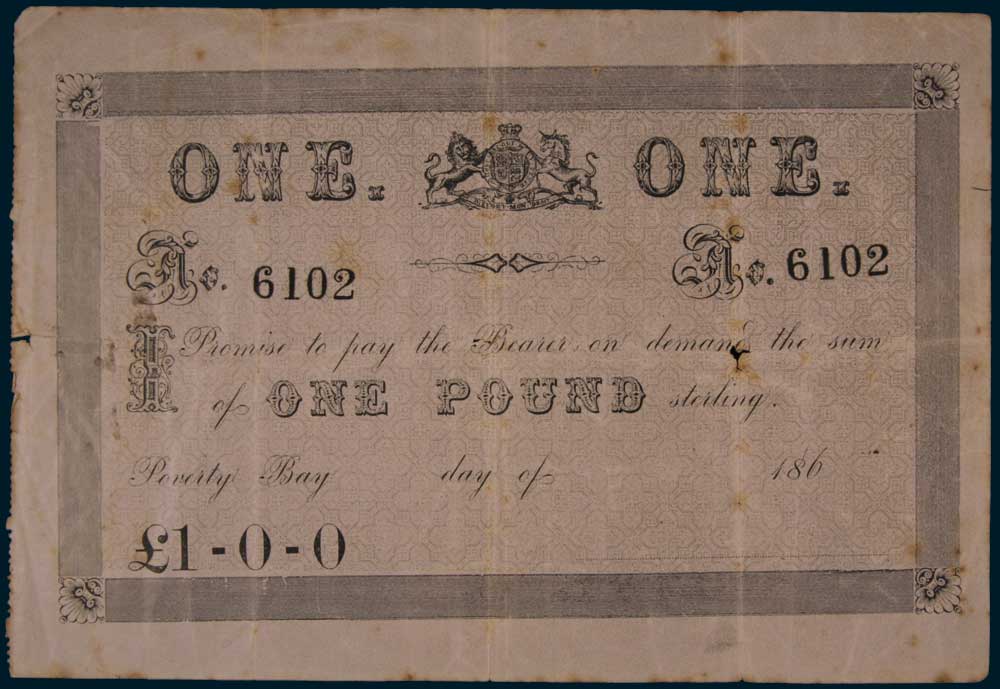
Captain G.E. Read, private paper money, one pound, Poverty Bay, undated (except for 186-) and unsigned, No. 6102, uniface issue, (Robb.PTU.15a). With four heavy folds, holes at all crease junctions, stains on face, otherwise good fine and of great rarity.
Ex Ross Meads Collection, Noble Numismatics Sale 54 (lot 2992). The account of the issue of notes by Captain G.E. Read appears in R.P. Hargreaves book 'From Beads to Banknotes' (p.75-6). Hargreaves describes the note issue as follows: 'Outside Otago, the only other known issue of private paper money in the 1860's occurred in Poverty Bay, where one pound and five pound notes were issued by Captain G.E. Read. The notes, printed on pink paper were less ornate than their Otago contemporaries. Captain Read was a pioneer settler in the area, and is generally given credit for the foundation of the town of Gisborne, where he arrived in 1852. Read has been described by one East Coast historian as the area's most colourful, most enterprising, and most prosperous pioneer and was regarded as the the uncrowned king of Poverty Bay". According to Sutherland, Read issued his notes as an advance to pay troops engaged in the Maori Wars, although they are said to have circulated amongst local Maoris as well. It has been recounted that the latter, after quarelling with Read, would enter his store, take some of the Read notes from their pockets and tear them up in order to express their contempt for him. Read, it is said, would pretend to get into a violent rage, and chase his 'enemy' from the store, while silently rejoicing in the profit he had made. Admittedly such an event may have occured once or twice, but it is suggesting a widespread naivety amongst the Maoris concerning paper money which, in fact, did not exist. The Read notes, unlike those issued in the south, were payable to bearer 'on demand'. Just how this was possible under the existing legal restrictions remains to be explained as all the known copies of the notes are unsigned and unissued. It is possible that the notes were, like the Otago Banking Company notes, never in fact issued.' Hargreaves illustrates a note with the number 2833 in the Hocken library for a value of one pound.
- Estimate
- $3,000
- Result Status
- Passed in