
Lot 5133
Sale 92 · Important Australian & World Coins, Medals & Banknotes
Images
Description
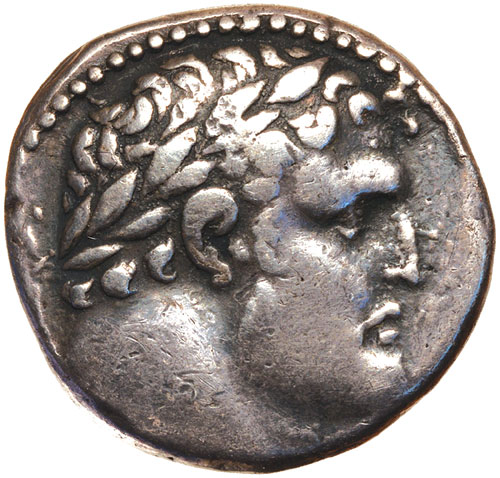
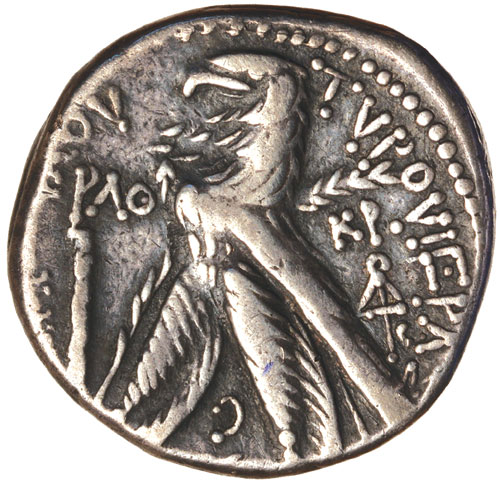
Phoenicia, Tyre, (c.2nd century B.C. - 1st century A.D.), silver shekel or tetradrachm, (14.10 grams), Jerusalem mint, 35-6 A.D., obv.laureate head of Melqarth to right, rev. eagle to left, KP over monogram, to left date **PLQ* = 139 (A.D. 13-4) above club, (cf.S.5920, cf.BMC 236, H.919). Small flan as usual for these rare issues and as is usually found poorly struck, short on flan, otherwise very fine/good fine, rare.
Ex Banking and Currency Museum. This issue has been attributed to Jerusalem and represents a need to supply good silver shekels, based on the Jewish Law the Mishna, which required that from the age of 13 every male had to pay the temple an annual tribute of half a shekel. This gave an enormous income (about 500,000 shekels annually) to the Temple at Jerusalem. The Mishna is very clear about the nature of this tribute, stipulating it be made with pure silver and in the example given "of Tyrian Currency" (Mishnah, Bechorot, 8.7). The law remained in effect until the Temple destruction in A.D. 70. This issue is confirmed in the Jewish sources about the production in Jerusalem of Tyrian shekels from Tosephta Kethuboth 13:20 "Silver mentioned in the Pentateuch is always a Tyrian silver: What is a Tyrian silver? It is Jersualemite". Meshorer consequently on this testimony shows that Tyrian shekels were struck in Jerusalem. (See Y.Meshorer, "One Hundred Ninety Years of Tyrian Shekels" in Studies in Honor of Leo Mildenberg).
- Estimate
- $600
- Result Status
- Sold
- Prices Realised
- $500