
Lot 4793
Sale 87 · Important Australian & World Coins, Medals, Stamps & Banknotes
Images
Description
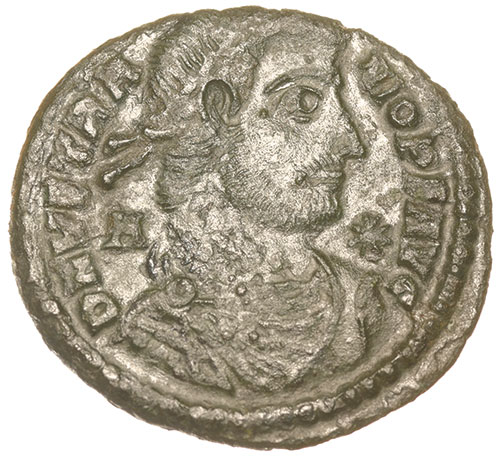
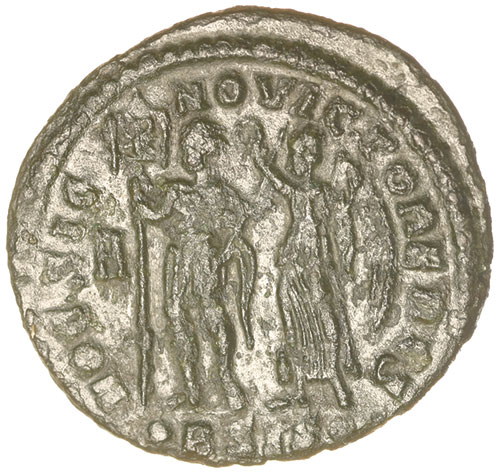
Vetranio, (A.D. 350), AE centenionalis, issued at Siscia mint, (4.15 grams), obv. bust of Vetranio with diadem, draped and cuirassed to right, around [D N] VETRA NIO P F AVG, A behind, star before bust, rev. HOC SIG NO VICTOR ERIS around, Emperor in military dress head to left, holding standard with "chi-rho" on banner, to right Victory crowning him, .BSIS. in exergue, (S.4042, RIC 287, LRBC 1174). Good very fine, rare.
In hoc signo vinces is the Latin transparent translation of the Greek phrase meaning "in this sign you will conquer". According to legend, Constantine I adopted this Greek phrase, as a motto after his vision of a "chi rho" on the sky just before the Battle of Milvian Bridge against Maxentius in the year 312. The early Christian symbol consists in a cross formed by the Greek letters chi and rho, the first two letters in the name Christ (used on the labaraum or standard of the above coin). The historian Eusebius states that Constantine was marching with his army (Eusebius doesn't specify the actual location of the event, but it's clearly not in the camp at Rome), when he looked up to the sun and saw a cross of light above it, and with it the Greek words meaning ("in this, be victorious!", often rendered in Latin as "In hoc signo vinces" as used on the above coin). At first, Constantine didn't know the meaning of the apparition, but in the following night, he had a dream in which Christ explained to him that he should use the sign against his enemies. Eusebius then continues to describe the Labarum, the military standard used by Constantine in his later wars against Licinius, showing the Chi-Rho sign. Its use of the above legend and standard by Vetranio (and also by Constantius II) is an echo of the experience of Constantine.
- Estimate
- $300
- Result Status
- Sold
- Prices Realised
- $300