
Lot 1415
Sale 85 · Important Australian & World Coins, Medals & Banknotes
Images
Description
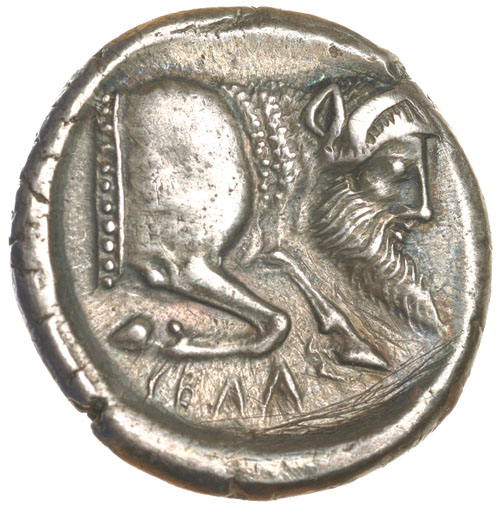
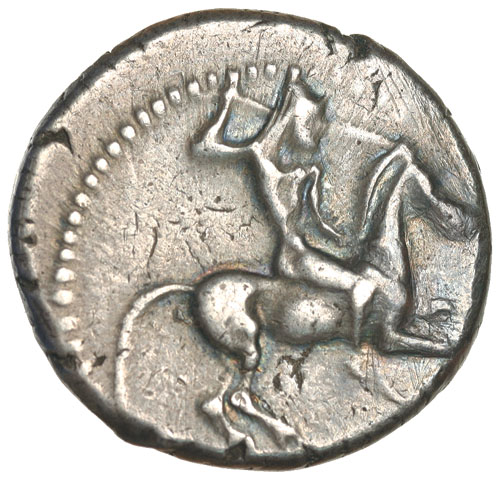
Sicily, Gela, (c. 490-480 B.C.), silver didrachm, (8.312 grams), obv. naked horseman to right wearing crested helmet, galloping right brandishing spear held high in his hand, rev. man headed bull to right with long beard, above **GELA*, (S.713, Jenkins Group I, No. 65/10, obv. 20, rev. 28 [This Coin], SNG ANS 11 [same dies]). Off centred on the obverse, toned, otherwise good very fine.
Ex CNG Triton II Auction Sale December 11-2, 1998 (lot 155) from the A.D. Moretti Collection and previously from the Maxime Collignon Collection sold by Feuardent, Paris, December 17, 1919 (lot 86). Situated on the southern coast of Sicily, Gela was founded in 688 B.C. by Cretans and Rhodians. It rose to become the most influential state on the island, but in 485 its ruler Gelon seized Syracuse and transferred his capital there, taking with him many of the leading citizens. His brother Hieron, later tyrant of Syracuse, was left in charge of Gela. Tetradrachm issues at Gela probably began circa 480 B.C., shortly thereafter becoming the principal denomination of the Gelan coinage, and remaining so down to the time of the destruction of the city by Carthaginian invaders in 405 B.C. The ultimate design of the tetradrachms displayed a racing chariot, (borrowed from the Syracusan coinage), and the forepart of a man-headed bull. The rather brutal half-length figure of the man-headed bull swimming right is based on the 'father of all rivers', Achelous, and is clearly identified by the ethnic Gelas as the personification of the river Gelas rushing to its mouth, where the city of Gela stood. Indeed Virgil wrote og Gela (Aen. 3, 702) as 'immanisque Gela fluvii cognomina dicta'.
- Estimate
- $1,000
- Result Status
- Sold
- Prices Realised
- $800