
Lot 3938
Sale 82 · Important Australian, British & World Coins, Medals, Banknotes, Orders & Decorations
Images
Description
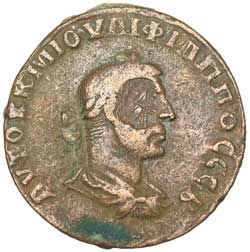
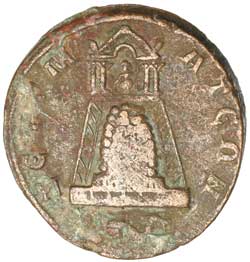
Syria, Commagene, Zeugma, Philip I, (244-249), AE 29, (15.802 grams), obv. laureate draped and cuirassed bust to right, around **AUTOK K M IOUAI FILIPPO*C CEB, rev. tetrastyle temple with peribolos containing grove, beneath a capricorn, ZE**GMATEWN* around, (S.3954, BMC 29 and cf.BMC 36). Countermarked on obverse with eagle with closed wings, some hoard patination on the reverse otherwise very fine and rare.
The ancient city of Zeugma, was founded in 300 B.C. by Seleukos Nikator, one of the generals of the Alexander the Great. At that time the city was named after the general and called ' Seleukia on the Euphrates.' The population in the city was approximately 80 000. In 64 B.C. Zeugma was conquered and ruled by Rome and with this shift the name of the city was changed to Zeugma in Greek meaning 'bridge-passage.' During Roman rule, the city became a regional centre, as the city of Zeugma was on the silkroad connecting Antioch to China with its own quay on the river Euphrates. In 256 A.D. Zeugma was destroyed by the Sassanian King, Sapur I and invasion was so dramatic that Zeugma city was not able to recover and for many years. In the summer of 2000, this city one of the great frontier cities of the Roman Empire, all but disappeared from the face of the Earth under the flood waters of a dam. The Turkish government over the past twenty years built a series of dams on the Euphrates river. This coin an issue towards the end of the city's importance is countermarked with an eagle the significance is unknown. Several examples of this coinage are known with this countermark.
- Estimate
- $100
- Result Status
- Sold
- Prices Realised
- $0