
Lot 3247
Sale 79 · Important Australian & World Coins, Tokens, Medals & Banknotes
Images
Description
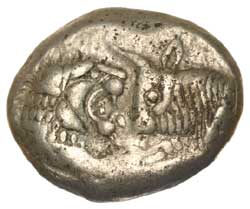
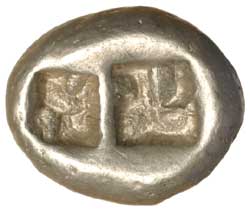
Lydia, Sardeis, time of King Croesus or later, (c.550-520 B.C.), silver half stater or siglos, (5.292 grams), obv. confronting foreparts of lion, facing right, and bull facing left, rev. two incuse punches of unequal size, side by side, (S.3420 [£450], BMC 41, Traite pl.10, 9, SNG von Aulock 2877, I. Carradice, Coinage of the Persian Empire BAR Inter. Ser. 343, [1987], Pl.10, 3). Attractive, good very fine and rare.
Ex Classical Numismatic Group Internet Auction 13 November 2000 with ticket. This coin is normally known as an issue of the Lydian king Croesus. Throughout the ancient world he was known for his legendary wealth. The lion is the paramount symbol of royalty and as such is appropriate for his Lydian kingdom. According to Herodotus, the Lydians were the first to strike gold and silver coins, but the numismatic evidence is not easily compatible with this statement. Carradice's study suggests that this coin is unlikely to have been minted in the lifetime of king Croesus but is of the type he calls early croeseid (c.550-520 B.C.), however Sear assigns them to this ruler c.560-546 B.C. The issue is the world's first bimetallic coinage, gold and silver pieces based on a stater of pure metal weighing about 10.8 grams. This was the initial phase of relatively short duration as shortly after the gold was reduced in weight to about 8.00 grams for a stater and the silver siglos of just over 5 grams replaced the silver stater. This is an historic and important silver coin from the earliest period of coinage in the western world.
- Estimate
- $600
- Result Status
- Sold
- Prices Realised
- $650