
Lot 3218
Sale 79 · Important Australian & World Coins, Tokens, Medals & Banknotes
Images
Description
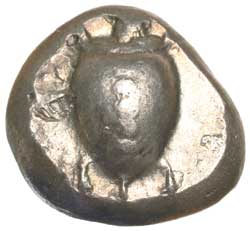
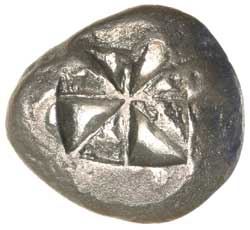
Attica, Aegina, (525/520-500 B.C.), silver stater, (12.200 grams), obv. sea turtle with a row of dots down dorsal spine, rev. incuse square 'Union Jack' design with sunken triangles, (S.1849, ANS MN 33 Pl.9, No.114 [This Coin described and illustrated]). Nearly extremely fine and rare thus.
Ex Selinus Archaic Silver Hoard and Noble Numismatics Sale 46 (lot 1914). One of the earliest European archaic silver coins in desireable condition with an impeccable pedigree from one of the greatest documented Archaic Greek coin hoards ever found. Aegina is a small island in view of Athens. It was one of the first trading nations in Greece and issued some of the first silver coins in the mid 6th century BC, which became the world standard coinage 'Turtles' until supplanted by the Athens 'Owls'. Over the years the artistic quality of the turtle improved. Aegina along with Lesbos were the only Greek city states outside the Greeks of Asia minor to expand trading empires after the fall of the Assyrians and Aegina became a commercial rival of Samos, while the Athenians remained inward looking. Aegina probably hindered any attempts by Athens to enter trade, because 'of an ancient hatred' as quoted by Herodotos. At the sea battle of Salamis against Persia, Aegina was voted the city that fought with to most valour. In 459 BC, Athens and Aegina went to war and Aegina was forced to join the Delian League dominated by Athens. About the same time the coins of Aegina changed from a sea turtle design to a land tortoise design. In 449 BC, Athens ordered all members of the Delian league to cease production of coinage. Aegina had lost its sea trading power to Athens. In 431 BC, the islanders were expelled and were replaced by colonists from Athens. In 404 BC, after the defeat of Athens by Sparta the Aeginetans were returned to their island.
- Estimate
- $1,000
- Result Status
- Sold
- Prices Realised
- $0